02 May 2015

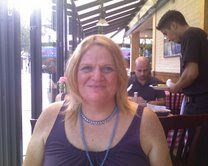
Still Learning What It Means


Early in my transition, people would sometimes say, “Oh, it must be so difficult.”  By “it”, they meant my transition and the things it entailed.  While I admit that some parts of it were strange, awkward or simply a pain in the ass (Try going through a second puberty in your forties!), I would point out that, for me, the real difficulty was having to live up to society’s, and some individual peoples’, expectations while pretending to be someone I wasn’t. 

From the time I first started my counseling, therapy and hormones until the day I had my operation, a bit more than six years had passed.  Now it’s been almost six years since my operation.  Along the way, some of my expectations have changed.  I have found friends and allies in people I didn’t expect to be on my side, or whom I simply never could have anticipated meeting.  On the other hand, I have lost relationships with people whom I thought would walk with me, or at least lend some sort of emotional support and spiritual sustenance, on my journey. 

Probably every trans person can say such things.  Also, nearly every one of us (or, at least, the trans people I know) would agree that the sorts of people we become, and envision ourselves becoming, are at least somewhat different from what we’d anticipated when we were still living our former lives or when we started our transitions.  A few might be disappointed, but I think more—I include myself—feel the pressure of, and are ostracized for not,  living up to a new set of expectations.  Some expected that I would be more sexual and attractive, at least by the standards of this culture.  Physical attractiveness and sexuality (at least in a hetero way) are seen as the hallmarks of femininity and femaleness.  (I think it’s the other way around, frankly.)  Others thought they’d find cute boyfriends or girlfriends, or husbands or wives who could “treat them right”.  Still others are trying to live up to other sorts of expectations, whether self-imposed or transmitted by the culture. 

Me, I’m not looking for a romantic or sexual relationship right now.  I don’t feel I need it; I can live just fine with myself, thank you.  Living alone, with a couple of cats, is certainly better than abuse or the demands some put on people in relationships. And while I’m going to try (again) to lose some weight, I rather like what I see in the mirror. Sure, I’m aging a bit quicker than I would have liked, but I think I also see an emotional honesty and vulnerability I never before saw. Perhaps others have seen it, too:  These days, people I meet talk to me because, nearly all of them say, “You look like someone I can talk to.”

Those same people tell me they knew, looking at me, that I’d survived a thing or two.  If I do say so myself, I have.  And, while I may not be the deepest person in the world, I don’t think people—whatever else they might say about me—accuse me of being shallow.  Plus, they all know that I mean whatever I’m telling them but I’m not saying any of it to be mean.

In short, I am starting to understand, not only what’s changed, but what I’ve gained in my transition.  Although some things are still very difficult, I still have hope that things will get better—or, more precisely, I will be better able to navigate them.  I’m also realizing now that the things and people I’ve lost probably would have been lost whether or not I’d transitioned or had my operation.  We change, sometimes incrementally, sometimes dramatically. But change we do, as long as we’re living.  I have to remember that a dozen years have passed since I started my counseling and, as I mentioned, almost six since my operation.  In such time frames—and in shorter ones—things changed, whether in my expectations or perception of myself and others. I didn’t want to be the same person at 24 as I did at 18, or the same person at 36 as at 30.  So why shouldn’t the kind of woman I want to be change as well.  After all, let’s face it:  I couldn’t be, at my age, the kind of woman I envisioned when I was younger, even if I wanted to.

Here’s some advice I’d give to someone—especially a young person—starting a transition:  You’ll change, but not necessarily as a result of your transition or surgery (if you decide to undergo it). And sometimes your change is of a kind you hadn’t expected.  Understanding those things, from what I’ve experienced, a way to prevent regrets and disappointments, neither of which I have about my transition or surgery.  

01 May 2015

This Says It All

Brevity has been called the soul of poetry.  It's also been called the soul of wit.

It might also be the soul of political and social messages. This ad on a London bus couldn't have made its point any better, or quicker:


london
From Patheos
 

30 April 2015

Gays Caused The Baltimore Riots. Bill Flores Says So.

Let's see...Gay people (which, in the minds of many, still include trans folk) have been blamed for Superstorm Sandy, Hurricane Irene and other natural disasters...the Benghazi attacks...the Newtown school shootings and other massacres...and...

...the riots in Baltimore.  Silly me.  I thought they were a reaction to the death of Freddie Gray.  Hmm...Here I was, thinking that people were (rightly) upset that another young black man in a racially divided city (and country) died while in police custody.  

It takes a greater mind than my own to understand, let alone explain, the slippery slope from allowing same-sex marriage to arson and looting in the streets. So I will let the estimable Bill Flores, a Republican (what else?) Representative from Texas, enlighten us:

https://soundcloud.com/rightwingwatch/flores-links-gay-marriage-to-baltimore-riots

29 April 2015

Rachel Bryk: A Trans Woman Driven To Suicide

As I have mentioned in other posts, friends and acquaintances of mine have committed suicide.  Although I have felt--and sometimes still feel--sadness over losing them and anger over their absence, I never could condemn any of them.  For one thing, I went through years--decades--in which not a day passed without my contemplating my own self-inflicted end.  So I understand, at least somewhat, despair.  For another, I have learned that just about everybody has a limit--almost never self-imposed--on how much physical or emotional pain or anguish he or she can endure.  Of course, some people have more tolerance for such things than others, but some people are also given burdens to bear that most other people can't understand.

For some, no amount of love and support from family, friends and others can ease the suffering.  That is the reason why, so often, when someone takes his or her own life, there seems to be a chorus of people lamenting how esteemed or even loved that person was.  Those very same mourners wonder what they did or didn't do for the one who just ended his or her existence.

But then there are the ones who, knowing someone else's vulnerability, will do whatever they can to push that person over the edge.  It can be simple harassment.  Or it might be something more serious, like spreading false rumors about the person to cause him or her to lose a job, housing or to experience some other kind of life disruption.

Then there is the lowlife who wrote, "DO IT, if you're such a weak willed thin skinned (sic) dipshit, then fucking do it" in response to someone who wrote about killing herself in an online forum.  "Good riddance," responded another alleged human.

The woman who wrote about killing herself was in constant, intense pain from fibromyalgia and rheumatoid arthritis.  And she was transgendered.

Although Rachell Bryk's mother believes that the constant pain and the rejection she received as a result of her disabilities are what drove her to jump off the George Washington Bridge, messages found on her computer described some of the online bullying she experienced.

Now, I've experienced online bullying from Dominick, who--among other things--sent me an e-mail that said he would make my life so miserable that it would "make living in a cardboard box seem good".  And he sent out e-mails claiming that I committed all of the crimes transphobes and the simply ignorant believe trans people do as a matter of course.  He did other things, too, because he was angry over ending a relationship he always claimed--while we were together--meant nothing to him. 

All of that was bad enough.  But how much more difficult would it have been for me to deal with those things had I been in constant physical pain?

Whatever the truth is about Rachel's situation, I can only hope that if there is indeed anything after this life, that it does not include the pain and torture she experienced while she was here.


28 April 2015

Queensboro Plaza Dawn

Having an early morning class means, as often as not, being sleep-deprived, both for me and my students.

There are rewards, though:  Students in such classes tend to be a bit more dedicated than those in mid-afternoon classes.  Also, riding to work early can be a very pleasant experience, especially when you're out before the rush-hour traffic and people are walking their dogs--or themselves--rather than rushing to the train or bus.


And then there are the air, light and the relative overall calm of the dawn (or, during the winter, pre-dawn).  Gertrude Stein once said that every great artist she encountered was up before dawn or slept until noon.  I can well understand the former when I see the play of the light of the rising sun on the colors and shapes of a landscape, wherever it may be.


Perhaps "Queensboro Plaza Dawn" doesn't have quite the ring of "Chelsea Morning".  But it offers a vista that, although grittier, is as vivid as the moment Joni Mitchell portrays in her song.  And both are equally transcendent and ephemeral.


27 April 2015

Marching For What?


Isn't it funny that when people want to "defend" "marriage", they almost always are talking about one kind of marriage to the exclusion of the others.

Such was the case at the "March for Marriage" held the other day in Washington, DC.


When New York State legalized same-sex marriage in June of 2011, four of the Senate's Republicans voted for it.  In doing so, they joined all except one of the Senate's Democrats. 

Guess who was at the March?  Right...the Senate Democrat, none other than Ruben Diaz Sr., a Pentecostal minister.  (Now, what was that about separation of church and state?)  He was joined by a contagion of conservative clergy people from his native Bronx, which City Council member Ritchie Torres (who represents part of it) calls "the Bible Belt of New York City".

Some people may genuinely believe that God (or Allah or whomever) deemed that marriage is a relationship of one man and one woman for the purpose of procreation.  However, I get the feeling that too many other people--including, I suspect, many in the March--simply don't want gays or other people to have the same rights they have, just as certain white people didn't want racial equality because it would strip them of whatever social and economic superiority they enjoyed vis-à-vis blacks.

Then there are those who seem confused about what it is they're marching for:


Her sign reads:  "People are designed to be seeing and hearing and with all body parts intact and 'Tab A fits Slot B' perpetuates the species.

OK. So is she saying that blind or deaf people--or amputees-- shouldn't be allowed to marry?  And what's that about 'Tab A' and 'Slot B'?  Is she telling us that sex, reproductive or otherwise, is just a matter of getting one piece to fit into another, like a puzzle?
 

26 April 2015

More About Bruce Jenner

According to the Corey's comment on my post yesterday, and Diana's post on her blog, we didn't have to wait for the future:  There has, apparently, been more consternation over Bruce Jenner's Republican Party affiliation than over anything else revealed in the interview with Diane Sawyer.

I am definitely with Diana on this issue.  Like her, I simply cannot understand how any LGBT person supports the "Grand Old Party".  

Once, when I was  at the LGBT Community Center of New York for some even or another, the Log Cabin Republicans were having a "meet and greet". I bumped into a few of them and they tried to recruit me--why, I don't know.  I must say, they were all pleasant, polite and well-spoken.  But they also looked like GQ covers come to life, with the credit card limits to match. So, as nice as they were to me, I simply couldn't relate to them, personally or politically.


I take part of that statement back.  I could tell that they were trying to mask, forget or simply live through some sort of pain or loss.  The difference between them and me--aside from the fact that they were gay men and I'm not--is that they had (or, at least seemed to have) more means to deal with whatever they lost, gave up or had taken from them as a result of their living openly as gay men.  You can't (or, at least, shouldn't) hate someone for that.  Instead, we can only respect and, to the degree that we can, support each other in our pain and loss.  


I have lost more than some, but not as much as some others.  The point is, as Diana says, we all go into the unknown when we "come out" or transition and, as Mara Keisling wrote in a CNN money article, every one of us loses something, and some lose everything.

Yes, Bruce Jenner has money and fame.  But she has, like the rest of us, lost a lot of time and experiences in living as someone other than her true self.  She says she didn't transition sooner because she didn't want to disappoint people who saw her as a role model of manhood.  Trying not to disappoint--which almost inevitably is a losing battle--is in itself a loss.  So is the joy she probably didn't experience from her accomplishments.  

So, while I don't support her politics, I support her journey.  That is all any of us can do for each other.

25 April 2015

The Interview: Bruce Jenner

If you’re a trans person, your friends, family , co-workers and other acquaintances are probably talking to you about last night’s Big Event:  Diane Sawyer interviewing Bruce Jenner.


Some have said that Jenner’s “coming out” is a “tipping point” for public awareness and,  possibly, acceptance of transgender people.  For one thing, very few people who were as famous in their own right have publicly transitioned.  (Although he’s gained something of a reputation as an LGBT rights activist, Chaz Bono is known mainly for having famous parents.)  For another, everyone knew Jenner as the rugged and handsome (at least when he was young) Olympic gold-medal winner and actor.  And, as the twice-married media star revealed to Sawyer,  as a male he was never attracted to other males and now considers herself “asexual”.


In other words, the interview should help people to understand, as Jenner said, that gender identity is separate from sexual orientation—or, for that matter, proscribed gender roles.   Although most people thought Chastity Bono was a cute kid, most didn’t think of her as a “girly” girl.  When she “came out” as a lesbian, she fit the image of a “butch”, albeit a more glamorous version.  Thus, it didn’t challenge many people’s notions about trans people when Chastity announced she was going to become a man named Chaz.


That is not to say that Chaz’s public transition was not courageous.  In its own way, it might have been even more daring than Jenner’s because, even though only five years have passed since Sonny and  Cher’s daughter became their son, public awareness—and, I’d say, acceptance—of trans people has grown by leaps and bounds.  I’d say that we’re experiencing something like what gay men (and, to a lesser extent, lesbians) experienced during the years just after the Stonewall Rebellion. 


To be sure, there was still a lot of ignorance and hate that too often ended up in rejection and violence—as there is now.   But by the time the AIDS epidemic broke out, almost everyone in the Western world knew that he or she had a family member, friend, co-worker or other acquaintance who was gay.   As a result, people realized that being gay wasn’t a “choice” or a sign of depravity and much of the stigma around it faded.  To be sure, there are still folks showing up at funerals of murdered gay people with signs that say “God Hates Fags”, just as there are still people who say that we—trans people—aren’t human beings.  But such people are becoming the minority and, I hope, with people like Jenner going public, their numbers will shrink further. 


Who knows?  Perhaps in the not-too-distant future,  some celebrity will cause less consternation by saying, “For all intents and purposes, I am a woman” than for saying that she is a Republican! ;-)


24 April 2015

23 April 2015

Making LaHaye When He Hates

Was this a Freudian slip?:

"The Christian community needs a penetrating book on homosexuality."

"Penetrating"?  Hmm...What does that word choice tell us about the writer of that sentence?

Said author is Tim LaHaye. Yes, that Tim LaHaye. Actually, he was quoting someone with similar views, but that LaHaye used it as a rationale for--and in the beginning of--his book The Unhappy Gays still, I think, confirms something I've long suspected about him and lots of other "Christian" homophobes.

More to the point, the esteemed Mr. LaHaye took it upon himself to explain homosexuals for likeminded people, i.e., those who use their religious beliefs as a smokescreen for their bigotry.  He's the sort of person who's articulate enough to explain to people what they can't explain about people they hate, but--not surprisingly--not honest enough to call that hate what it is.

I remember reading The Unhappy Gays not long after it came out.  I was in college and had joined a campus Christian fellowship for all sorts of reasons, all of which had to do with my inability--at that time--to understand, let alone articulate or deal with things I'd felt for as long as I could remember.  I actually "came out" as gay because, frankly, I didn't know what else I was.  Some members of the fellowship said they would pray for me, and I don't doubt they did.  At least they didn't try to "cure" me by fixing me up with sisters or other females they knew.  And being around them spared me from a lot of those campus activities that begin with alcohol and end with rape.

Still, I knew I wasn't one of them.  I didn't see anything the way they did.  No matter how much some tried to include me, I knew I ultimately couldn't be a part of their world, any more than I would be part of the world of white picket fences.

And from other people I faced outright exclusion and rejection.  Ironically, La Haye cited such rejection as one of the reasons for the "intense anger that churns through even the most phlegmatic homosexual". Although he was wrong to categorize all gays as angry, he did understand that rejection makes people angry.  And although I didn't fit most of the stereotypes he claimed to be elucidating for his audience, I knew I was angry--or, at least, unhappy.

Not to make excuses for myself, but what else could I have been, really?  However, rejection was only part of the reason why.  Most important, I think, was that I was someone I couldn't understand and didn't ask to be.  Like anyone else one who's born different from other people, I didn't start off thinking I wasn't worthy of the things most people wanted and enjoyed.  But, like too many who are "minorities" or outcasts, I absorbed the subtle and not-so-subtle messages that I wasn't worthy.  Those same people and institutions that sent us those messages were also the very ones who stigmatized us for not achieving what they achieved in the areas of relationships and even careers.  

Anyway, it's because LaHaye understood that much that he was able to say he was being "compassionate" toward homosexuals.  You know, in a "love the sin, hate the sinner" sort of way. Not surprisingly, he thought that because God loves us, all we had to do was to accept that love and we'd be "saved".  From what?  Our "sin".  And for what?  "Eternal life", or some such thing.   

I got to thinking about all of this after a seeing a post on the Patheos Atheist Newsletter today.  The author of that post outlined some of the lies found in LaHaye's book.  That post is definitely worth reading.  If nothing else, it offer you some insights into some of the things Christian "fundamentalists" say about gay (and trans) people--and how much worse they were in 1978.

22 April 2015

An ID For Her True Self

Every trans person I've known who began living in her or his true gender as an adult wished that she or he could have so lived as a child and as a teenager.  And each one of us has some thing or another we wish we could have done, or had, during those years.

Some of them are major, such as, well, getting to live in our true genders--or, more specifically, having relationships with family members and friends as the people we truly are.  Then there are those seemingly-trivial things that could have added to the quality of our lives.

Throughout my childhood and teen years--in fact, through most of my life--I hated to be photographed. I'm still not crazy about having my picture taken now because, well, I'm not terribly photogenic, to put it mildly. But in my earlier years, I felt that every photo of me was a lie, a deception, because it was an image of what I was supposed to be rather than of who I was.

Of course, everyone jokes about how terrible their ID photos are.  Some actually believe that the Department of Motor Vehicles requires their employees to be on psychosis-inducing medication before taking photos for drivers' licenses.  But those of us who wanted to live as the people we were--and tried to seize moments of doing so by "cross dressing"--knew that having the kinds of IDs we had, in essence, forced us to be the people depicted in them.

Chase Culpepper understands what I've just described.  The 17-year-old South Carolinan was forced to dress male for the drivers' license photo, even though she identifies as female.  The Transgender Legal Defense and Education fund filed a suit on her behalf.  As a result, a settlement--announced this morning--will allow her to wear female clothes and makeup for the first major piece of identification many young people receive--and the one some regard as a passport to adulthood. And now she gets to be a Southern Belle!

21 April 2015

Jacob's Journey

Here is the story of Jacob LeMay, a transgender five-year-old boy:


20 April 2015

This Barber's Thinking Is Clipped

A month ago, I mentioned something a police commander once told me:  "Lucky for us that most criminals are stupid".

There is a corollary to that among transphobes, homophobes and haters of all other stripes:  We're lucky that, most of the time, their prejudices are based on a complete lack of reason or empirical evidence.  

And in the case of one member of the species, I don't know how in the world he got a law degree.  He fancies himself a constitutional lawyer and uses that platform to spew his bilge.

I'm talking about Matt Barber, founder and editor-in-chief of BarbWire.com.  He's called self-styled Christians to join him in hatefests disguised with fasting, prayers and other trappings of fealty to the God he claims to believe in.

Now he's claiming that same-sex marriage is "rooted in fraud and child rape".  

First, the "child rape" part.  I thought almost nobody who hasn't been living under a rock for the past thirty years still believes that all gays are paedophiles, or that having been molested or raped as a child will make someone gay.  Now, I know that my own experience, all by itself, doesn't prove anything, but I must mention that as a child, I was molested by a man who probably never even thought about having sex with an adult, or even post-pubescent, male.  I know of plenty of men who were sexually molested or abused by men but didn't "turn out" gay or even bisexual.  In my case, I had my gender identity long before the man I've mentioned ever laid a hand on me.

So how does Barber make the connection between between same-sex marriage and child rape?  Well, that's where the "fraud" part comes in.  You see, Barber claims that Alfred Kinsey instigated the "sexual revolution"--which, he says is responsible for the "artificial construct" of gay marriage.  Barber claims that Kinsey was "promiscuous homosexual and sadomasochist" whose research has been "discredited".  By whom?  Well, by no less than Dr. Judith Reisman, who claims, among other things, that Planned Parenthood funds itself through sex trafficking and that the "homosexual movement" in Germany gave rise to Nazism and the Holocaust.

But, oh, it gets better.  I'm not an expert on Kinsey or, for that matter, gay marriage.   Still, I don't think it's a stretch to say that I've read most of the arguments for and against gay marriage.  Perhaps, at my age, my memory isn't what it used to be, but I feel confident that I haven't seen or heard a single argument in favor of same-sex marriage, anywhere, that makes reference to Kinsey's work.  

And Barber claims that the arguments for gay marriage are constructed on a house of cards!

To top everything off, he ends his diatribe with this little gem: "At this point, prayer alone may save marriage and keep, at bay, the wrath of a just and Holy God."

I'm not going to argue with or against his or anyone else's right to believe in such a God, or any other kind.  I simply don't understand how he, as a self-proclaimed Constitutional lawyer, can forget that the First Amendment guarantees the principle of the separation of church and state.  How can he advocate for or against a law on the grounds that it's God's will, or some such thing?

Fortunately for us, only those who have suspended their facilities for logic and reason--or never had such facilities in the first place--will place any credence in his arguments.  Still, that's not going to stop them from fighting viciously.  So, while they won't win, ultimately--they can't--they'll do whatever they can to forestall the inevitable.

19 April 2015

Anti-Gay Day: Keeping It All In The Family

As I've said in a previous post, there's a corollary to Newton's Third Law in the struggle for LGBT equality.

That law says that for every action, there is an equal and opposite reaction.  When it comes to LGBT equality--or any other social or political issue--we usually call that reaction "backlash".

That is why, after same-sex marriage has become legal in 36 of the 50 US States (and the District of Columbia), some of the holdouts are passing laws that make it legal to discriminate against us and calling it "religious freedom".

Now we've seen another kind of backlash in a McGuffey (Pennsylvania) High School:  an "anti-gay day", which some students held on Thursday.

It would be one thing if the haters wore flannel shirts--as LGBT people and allies do on "gay days"--and left it at that.  But no...They're hanging signs on gay students' lockers, which the teachers have been taking down.  Worse, the bigoted bullies are harassing gay students, sometimes physically, and have drawn up and circulated a "lynch list", which includes the names of gay students.

This awful spectacle also illustrates something else I've said:  Kids, especially teenagers, may not listen to the adults (actual or alleged) in their lives.  But they never, ever fail to imitate them.

And who are the role models for the young thugs in McGuffey?  Why, none other than such bastions of rectitude as Focus on the Family and the Illinois Family Institute, which organized antigay events like Day of Dialogue and walkouts to protest the Gay, Lesbian and Straight Education Network's "homosexuality-affirming dogma".

Such organizations also prove something else I've said:  If an organization has "Family" in its name, there's a good chance it's promoting prejudice and worse against LGBT people.  It seems that you can get away with anything as long as you use that word--or mention your religious beliefs.  Wanna bet those kids in Pennsylvania figured that out?

18 April 2015

Embracing Herself And Losing The Job She Loved


Imagine doing something you love—your calling, as some of you might say—for years and years.  But all of that time you’re keeping a secret from others and lying to yourself. 

Finally, one day, you reveal that secret.  To be more exact, you stop wearing the mask and telling the lies you created in order to keep that secret a secret.  

That secret is not about a past crime or other indiscretion.  Rather, it’s what you’ve always known about yourself and it flies in the face of everything your friends, family and co-workers have always seen—or, at least, what you’ve allowed them so see.

You simply couldn’t keep that secret anymore.  It would have taken everything you could muster, if it hadn’t already:  Nothing is heavier than a secret.   Nobody is strong enough to keep it forever. 

So you let it go and take on the truth about yourself.  And you live it.  What next?

Well, depending on your situation, you might lose friends, family members—or even your job.

All of those things happen to too many of us after we start showing up for work, family gatherings, school or other aspects of our lives as the people we actually are.  Some of us are shunned; family members and friends decide we’re no longer good enough for them.  Some of us are humiliated and harassed on our jobs, the latter often being among the tactics used to push us out or get us to  quit.


Everything I’ve just described happened to Tamara Lusardi.  As a kid, she grew up on US Air Force bases around the world.  Then, for three decades, she worked for the US Army in various capacities and even served in the first Gulf War.  She found her niche as a software quality ensurance specialist for the Aviation and Missile Research, Development and Engineering Center at the Redstone Arsenal near Huntsville, Alabama.


But after she started her transition, superior officers limited her access to the women’s restroom, referred to her by male pronouns and her birth name and intentionally outed her.  While working as male, she was praised; after she came to work as a woman, she was removed from her post and her professional reputation was irreparably damaged.


Three years ago, she filed a complaint with the Equal Employment Opportunity Commission.  On 1 April, the EEOC decided that her civil rights had been violated and that Army officers had created a hostile work environment when they subjected her to ridicule and embarrassment.

According to the Transgender Law Center, Army officials have 30 days to ask the EEOC to reconsider its ruling.  According to a spokesman, the Army will comply with the ruling.

Lusardi says she hopes this ruling will set a precedent that will make life easier for other transgender women and men.  On the other hand, she points out, many people still need to be educated about us and Federal policy still allows most healthcare insurers. to exclude transgender people.

N.B.  The article I linked was sent to me by my father.

15 April 2015

Look Who's Winning The "Ultimate Guy Search"

Men's Health is holding its "Ultimate Guy Search".  The winner's image will adorn the cover of the magazine.

New York native Aydian Dowling now holds a strong lead in the voting.  Looking at him--and hearing of his desire to give back to his community-- it's not hard to understand why.  Still, he's humbled by the support he's received.  Five years ago, he says, he "would have laughed" if someone had suggested that he'd be in such a competition.  "No way would you be putting me shirtless on a magazine" is what he probably would have told the editors of the magazine.

Now, since you're reading this blog, you've probably guessed the reason why I'm writing about him:  Yes, he's a trans man.  And one of the reasons why he took up body-building, he said, was to build his self-confidence during his transition.  

He is sharing his love of body-building with other transgender people in the hope that it will build their self-confidence as it did his.  Also, he says, he wants to "break the stereotype of what a man should or shouldn't be".

He sounds like the man for the job.

 Aydian Dowling: Transgender Man Leads Men's Health's Cover Model Search