Showing posts with label women and cycling. Show all posts

20 September 2016

Girls Just Wanna Ride Bikes...In Iran

If you were going to start a movement, would you ban 51 percent of the people from participating in it?

Perhaps that seems like a rhetorical, or merely silly, question. 

It is, however, one that is begged by a turn of events in a country full of paradoxes.

I'm not talking about the US Presidential election campaign.  Rather, I am referring to a something that happened in a country where such things normally don't happen--and what resulted in one part of that country. 

The nation in question is performs more gender-reassignment surgeries than any country except Thailand.  Yet its leader once famously declared that there are no homosexuals in his country.

By now, you may have realized that I am talking about Iran. 

It's not a country noted for its advanced environmental policies.  So more than a few eyebrows were raised when, in November 2015, environmental activists in Aran, an industrial city in the western province of Markazi, introduced the idea of "Tuesdays Without Cars" or, more generally, "Clean Tuesdays", on which people are invited to leave their cars at home and, instead, commute by bicycle. 

The idea quickly spread and now all of the Iran's provinces have joined in.  Now it's on the verge of becoming a national event.


But national events aren't easy to coordinate in a country like Iran.  I have never been there, but I have been told that in at least one sense, it's like neighboring Turkey, where I have spent some time:  there are great cultural differences from one region to another.  So, in a city like Tehran or Istanbul, there are neighborhoods full of people who live lives not too dissimilar from those in Western capitals.  However, in both cities, there are also conservative religious enclaves.  So, it almost goes without saying that in the countryside, customs and interpretations of Islam are, shall we say, not exactly liberal.

In Marivan, a county of Kurdistan province about 500 kilometers from Markazi, some women were stopped on 29 July for the crime of...cycling.  At least, some police officers had the idea that women on bikes were haram.  For the time being, women can't ride bikes on the streets in the area.

While there is nothing in Iranian legal codes that prohibits women from cycling, in places like Marivan, the idea of a woman riding a bicycle goes against traditional religious values--or, at least, interpretations of them.

Now, I am certainly no expert on the Qu'ran or Sharia law, but I don't think anything in either would exclude women from riding bicycles, specifically.  But some would interpret those texts, which warn against shameful acts, to mean that women should not ride bicycles.

Or, at least, they would interpret them to mean that women should not be seen riding bicycles in public.  Upon hearing about the July incident, Mamousta Mostafa Shirzadi, the Friday prayer Imam for Marivan, said that officials of the Sport and Youth Organization "need to provide" the women an "appropriate indoor space" for cycling.

In response, organizers of Tuesdays Without Cars pointed out that women, as much as men, need to be able to use their bikes as transportation-- and not just for exercise or recreation, which is all that an indoor space would allow.

Here is a video from a protest against the ban:


Below is a still from a video of a mother and daughter defying the de facto ban on women cycling:


A mother and daughter defy the fatawa against women cycling.


30 December 2015

How Important Is The Bicycle In Women's History?

In a post I wrote three years ago on my other blog, I relayed one of the most striking insights Susan B. Anthony offered:
   
    "Let me tell you what I think of bicycling.  It has done more to emancipate women than anything else in the world.  It gives women a feeling of freedom and self-reliance."

Yesterday, I came across this:


     "Advertisements, magazines and posters promoted the image of the New Woman, just as other forms of mass media would later exhibit images of the flapper, the housewife, the wartime worker, and the androgynous feminist.  The bicycle was the symbol of the New Woman's freedom outside the home, as she raced off with her friends--men or women--down city streets and into the countryside."


Obviously, that didn't come from Ms. Anthony.  It did, however, come from a source that's intersting, if not as much so as, and for different reasons from, the godmother of feminism as we know it.


The second quote is the only mention of the bicycle in The Social Sex:  A History of Female Friendships, by Marilyn Yalom with Theresa Donovan Brown.  Dr. Yalom is a former Professor of French and senior scholar at the Clayman Institute of Gender Research at Stanford University. Ms. Donovan Brown is a former speechwriter and ran a financial communications firm.


I strongly suspect that Dr. Yalom supplied most of the information and Ms. Donovan Brown did most of the writing.  After all, the section on women's friendships and the salons of 17th Century France contains ideas and insights that only someone who read the sources in the original could have gleaned.  And the prose flows freely--like, well, a good speech.


Therein lies both the book's strengths and flaws.  While Donovan Brown's prose flows freely, it often lacks depth.  While Yalom's research provides the reader with glimpses into the nature of the relationships described in the book, and shines a light onto documents that might otherwise have been lost, those documents (letters, stories, essays and novels) come almost entirely from women (and, in a few cases, men) from, or with connections to, the upper classes.  That, perhaps, is not Dr. Yalom's fault, as most women who weren't part of those classes were illiterate until the 19th Century and rarely went to college before World War II.


Still, the book is an engaging and, at times, interesting read.  It won't turn you into a scholar or an expert, but it's a good starting point for anyone who wants to read more about relationships or women's history.  Finally, there is something to be said for any piece of writing that reminds readers of the importance of the bicycle in changing women's lives, however brief and fleeting that reminder might be.


11 April 2014

Myths About Women And Cycling

Given my life experiences, it would surprise few people to know that I think about some of the differences between female and male cyclists, and the experiences each of us has.

I have also become more aware of just how male-centered the cycling world--in everything from the social contexts of rides to equipment design to the attitudes of some bike shop employees.  Also, I am shocked at how much of that male-centeredness--as well as some out-and-out misogyny--I helped to perpetrate.


So I guess it's not surprising that some old myths about women and cycling still persist.  I was aware of some, and learned of a few others from this infographic that recently came my way:


From Biking Toronto

25 February 2014

Women, Bikes And Equality

Yesterday I wrote about a rather curious phenomenon:  the cities and countries with the strongest cycling cultures aren't necessarily the ones with weather and terrain most people believe are best for cycling.  As examples, I cited Boston, New York, San Francisco and Portland in the US and such European locales as Amsterdam and Copenhagen.

Last week, I wrote about the relationship between the two major bike booms (1890s-early 1900s and 1970s) and the women's rights movements of those periods.


From Brain Pickings


Perhaps it's serendipitous that I came across a United Nations Development Programme Report which ranked countries, among other things, in gender equality. Tell me whether you are surprised to see these countries in the Top 10 (as of 2012): 

1. Netherlands 
2. Sweden 
3. (tie) Denmark 
3. (tie) Switzerland 
5. Norway 
6. Finland 
7. Germany 
8. Slovenia 
9. France 
10.Iceland.

After seeing that, I did a bit of research. (OK, I spent a few minutes on Google.) I found a number of reports that rank Seattle, Portland, San Francisco, Boston, New York, Washington DC and Madison, Wisconsin among the best US cities for gender equality.

Is it a coincidence that the countries and cities in which cycling and cyclists are most mainstream are also the ones where a woman has the best chance to get a good education, paid what she's worth and the health care she needs?

Just askin'.

13 December 2012

Susan B. Anthony On Cycling


"Let me tell you what I think of bicycling. I think it has done more to emancipate women than anything else in the world. It gives women a feeling of freedom and self-reliance."

Those words were uttered by none other than Susan B. Anthony.  What she said was not at all hyperbolic:  bicycling almost single-handedly brought women's clothing from the 19th to the 20th Centuries.  


In this illustration from an 1895 issue of Punch magazine, the young woman on the left is wearing the then-new "bicycle suit."  The woman on the right, in contrast, is wearing the ankle-length skirt and bodice that were more typical of women's attire until that time.  


I wonder whether the woman in the "bicycle suit" is wearing some sort of girdle or other torture device to cinch her waist. Looking at the woman on the right, and knowing about the fashions of the time, I would guess that she had a corset underneath her outfit.  By the end of the decade, that undergarment would become as outmoded as seamed stockings would later become.  As women were released from the bondage of whalebone, their skirts got shorter and, sometimes, morped into the then-shocking "bloomers", which resembled, more than anything, old-style Turkish trousers.


Even Susan B. Anthony herself probably didn't realize how true her comment was.  Even during the "dark ages" of cycling in the US, women wore clothing that allowed much greater freedom of movement than what their grandmothers donned.  So, by the time the "bike boom" of the 1970's came along, it was that much easier for us to ride--and to work 18-hour days.

13 August 2012

WE BIKE At Smorgasburg

Yesterday I promised to tell the readers of my other blog about the event where I saw the Pashley Mailstar, which is used by the "posties" of Royal Mail in the UK.

Liz (R) showing two cyclists how to repair an innertube.


Liz Jose, the founder and president of WE Bike (Women Empowered through Bicycles) used the bike to transport a table tools and various WE Bike schwag to a repair workshop/recruitment drive held at Smorgasburg in Brooklyn.  

We volunteered our own bikes for "the cause"!


Actually, some might argue it wasn't a full-blown repair shop.  What we did was to teach some female cyclists (and, in a few cases, men who accompanied them) how to fix flats.  If a cyclist--especially a female rider-- learns to do only one repair, this should be the one.  If nothing else, knowing this basic skill can keep you from getting stranded.

Erin (facing to the side), Shelley (in pink t-shirt) and Liz (seated).


The fear of getting stranded by a deflated tire, and not knowing how to fix it, is one of the most common reasons why people won't take longer rides or use their bikes for transportation.  I think this fear is greater among female cyclists, for we (well, many of us, anyway) have more reason to fear for our safety if we are stuck in the middle of an unfamiliar or unsafe area by ourselves.  Also, I think that many women have been taught, implicitly or explicitly, to distrust their own abilities to fix even very basic things, not to mention to be self-sufficient in any number of other ways.  

Having been raised as male, I wasn't inculcated with that same distrust of my abilities.  Of course, I did not understand that until I started the transition that has culminated in living in the female gender of my mind and spirit.  I suppose that, in addition to some skills that I possess, that self-confidence might be what I can offer the women and girls who join and ride with WE Bike.

I hope that doesn't sound condescending, or as if I'm some well-intentioned  but misguided do-gooder.  I have been known to do things at least partially for altruistic reasons, and I can say that joining WE Bike is one of those things.  But the most important reason why I've decided to involve myself with it is that, since my transition, I've come to feel out of place in both the formal and impromptu men's cycling groups in which I've participated.  Even the so-called co-ed groups are dominated by males.  Not that I have anything against them:  I simply feel that I want and need other things now, as my motivations for (and, most likely, style of ) riding have changed.

Plus, so far, I'm enjoying the company of the women in WE Bike.  Isn't that the real reason to be involved with any group, whether or not it's formally organized?


As for the dilemma I faced: I managed to look presentable enough, I suppose, for the writing workshop.  I don't know whether anybody there noticed, but I was wearing a cardigan/jacket over the sundress in which I rode to the workshop--and to the WE Bike workshop.  But once I got to the latter event, I covered the top of my dress with something else:


I'd say that the fit might've been a bit snug, but the color worked!  And somehow I managed not to smudge the T-shirt or sundress in spite of the grease and dirt on my hands!


24 June 2012

WE Bike And Me

What's gotten into me? 


I mean, what's this with me and volunteering?

It's not as if I haven't volunteered before.  But within the past two weeks, I've begun volunteering with two cycling organizations.  And--quelle coincidence--it turns out that they're going to be working with each other.

I've mentioned my recent experiences with Recycle-A-Bicycle.  I intend to continue working with them as my schedule allows.  It looks like I'll be doing the same--and perhaps more--with a new organization called WE Bike.

I learned of them at the New Amsterdam Bicycle Show, where they had a booth.  Liz, a bike mechanic and youth educator who started the organization only a couple of months ago was at the booth.  And she was under the arches of Grand Army Plaza yesterday, where WE Bike was holding a repair workshop.  

She immediately recognized me.  I didn't think I was so memorable.  Even more interestingly, she mentioned my blog and my Mercians.  Hmm...It's not often that my reputation precedes me.  Is that a good thing?

Anyway, I got there a bit late.  But I went to work right away, showing a woman from the Caribbean island of Dominique how to fix a flat.  She had just purchased her first bicycle, not long after learning how to ride a bicycle as an adult.  

Yesterday, I thought she was mastering what I believe to be the first thing every cyclist should learn to do.  But she apologized.  For what?, I asked.  Then I realized she was doing something I've seen many other women do--and which I've caught myself doing since I started to live as a woman:  apologizing for no particular reason.

"You are officially in a guilt-free zone," I declared. "This circle around me"--I stretched my arms--"is off-limits for gratuitous guilt."  At first, she didn't know what to make of what I said--or, I imagine, me. But then she giggled.  "Don't worry," I said, "You'll be fine."

I was thinking about her as Liz and I talked after the workshop.  We agreed that getting more women to ride, with other women, and learning how to fix their bikes from other women, could help some--especially the young--build their confidence.  Plus, I added, it would help them become more independent. 

Then I thought about my own experiences of working in bike shops.  I don't recall seeing a female mechanic and, in those days, it seemed a lot of shops--including two in which I worked--had a "shop girl" who usually was a salesperson/cashier/hostess/Gal Friday. (I hope I don't seem sexist in using those terms:  I can't think of any others that would accurately describe those roles.)  In other shops--including one in which I worked-- such jobs, along with record-keeping and such, were done by the proprietor's wife.

In recounting those experiences for Liz, I fancied myself, for a moment, as a kind of Prometheus.  Please indulge me if it seems a bit grandiose, but I realized that when I was showing two women how to remove bottom brackets and headsets, and how to true wheels, at Recycle-A-Bicycle, I was passing along knowledge that, in my day, was possessed almost entirely by males.  And I probably wouldn't have learned those skills had I not spent the first four decades of my life as a male.

Or, perhaps--here comes the baggage of my Catholic education!--I am doing penance for all of those times I was one of those awful men who spoke condescendingly to female customers and who was less than helpful with girlfriends who actually wanted to ride bikes with me.  If the work I am doing, and expect to do, is a penance, I suppose I'm lucky:  There are definitely worse and more painful kinds of atonement!

Anyway...I have a feeling that interesting times are ahead for me.


P.S.  Liz has said that she wants to make WE Bike "inclusive."  So she wants transgender women to participate.

14 June 2010

Where Are The Women?

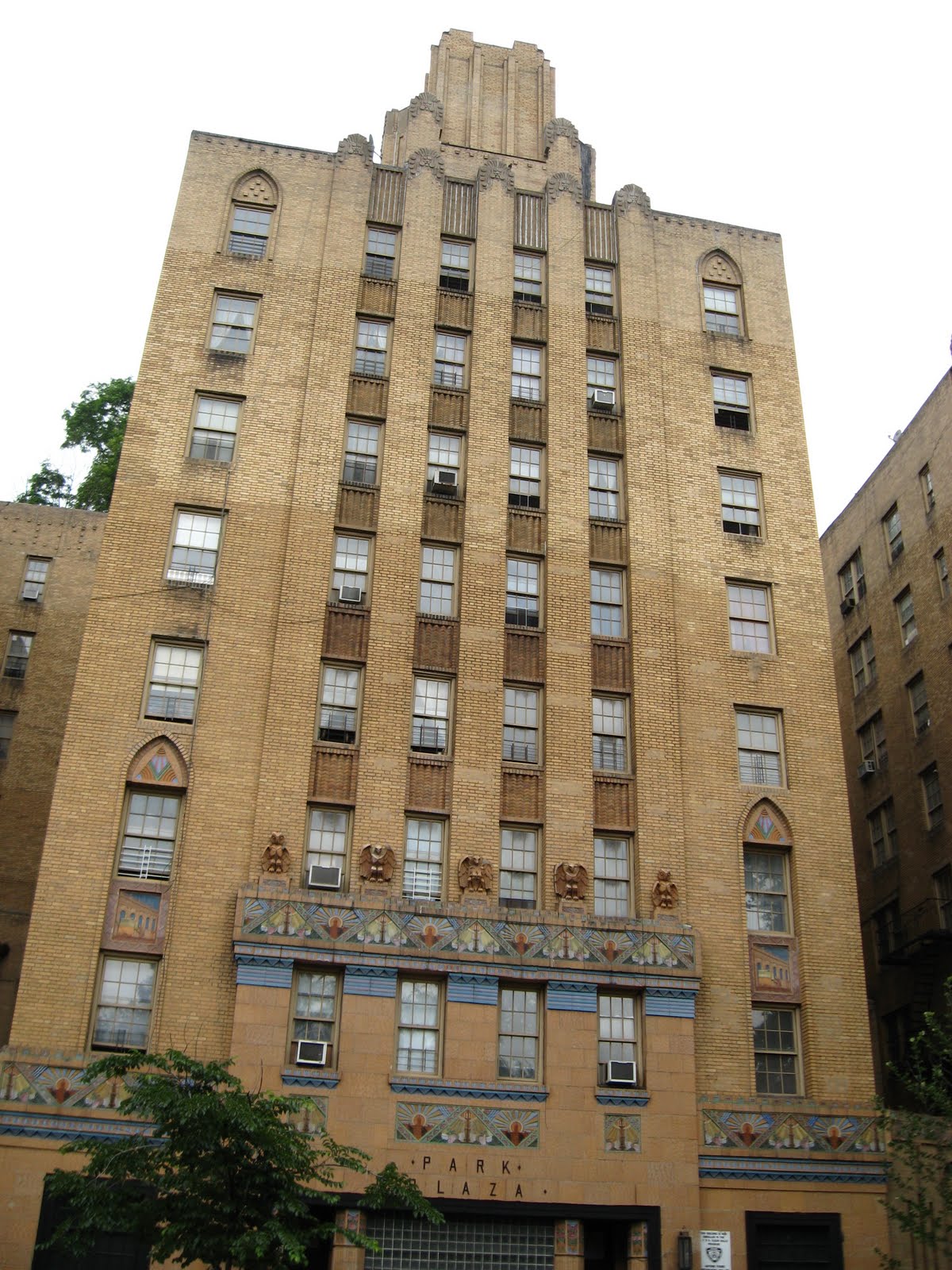
I don't know whether it's possible to be an urban cyclist without having or developing some sort of interest in architecture. One of the wonderful things about New York and some other cities is that you can find a gem where you weren't expecting it.

This beauty is right across the street from the new Yankee Stadium:


I hadn't been in that part of town in a long time, so I don't know whether or how recently the building was renovated.  I suspect that it was fixed up as the new stadium was built, but I also suspect that it hadn't deteriorated very much, as so much of the neighborhood around the old stadium (which was next to where the current stadium stands) had for so long.

If people couldn't tell that I hadn't spent much time in the neighborhood just by looking at me, they had to have known once I started taking photos.  Then again, maybe some architecture lovers have trekked up that way.

Wouldn't you love to live in a building with this over the entrance?:


Or this by your window?

                          
For a moment, I wondered whether someone might get upset with me for pointing my camera at his or her window. But building residents may be used to that sort of thing.

So, how did I end up there?  Well, I just hopped on Tosca (my Mercian fixie) and pedalled across the Queensboro (a.k.a. 59th Street) Bridge.  After descending the ramp on the Manhattan side, I found myself riding past Sloan Kettering, Rockefeller University and lots of dimpled blonde toddlers escorted by nannies or au pairs who were much darker than them.    As I rode further uptown, the kids got darker and didn't have au pairs or nannies.   None of it was new to me, but something would be after I passed the building in the photos.

In Manhattan, almost everything above Columbia University is commonly referred to as "Harlem," and in the Bronx, almost everything below Fordham Road is called the South Bronx.  As it happened, I pedalled through the places that are, technically, Harlem and the South Bronx.  But I also passed through a number of other neighborhoods that consist almost entirely of people of color, most of whom are poor and whose neighborhoods are lumped in with Harlem and the South Bronx.

I ride in those places because there are some interesting sights and good cycling.  But today I noticed something in those neighborhoods that, I now realize, makes them not only different neighborhoods, but different worlds, from Astoria, where I now live, and Park Slope, where I lived before moving here--not to mention neighborhoods like the Upper East Side and Yorkville, which I also rode through today.

In neighborhoods like Harlem and the ones I saw in the Bronx, one generally doesn't see as many adults, especially young ones, cycling.  And, as one might expect, the bikes one sees are likely to have been cobbled together.  I'm not talking about the kinds of bikes one can buy used from any number of bike shops or the ones available from Recycle-a-Cycle and other places like it. Rather, I'm talking about bikes that look like they were spliced together from bits and pieces that were tossed out or found lying abandoned somewhere or another.  

As often as not, the bikes and parts don't go together.  I'm not talking only about aesthetics:  Sometimes parts that aren't made to fit each other are jammed together and held together by little more than the rider's lack of knowledge about the issue. 

It was usually poor men of a certain age who were riding the kinds of bikes I've described.  Younger men might ride them, too, but they are more likely to be found on cheap mountain bikes, some of which came from department stores.  A few are the lower-end or, more rarely, mid-range models of brands that are sold in bicycle shops.  Those bikes were probably acquired in one degree or another of having been used; none of them looked as if they were purchased new.

But the most striking thing I noticed is this:  I did not see a single female of any age on a bike in those neighborhoods.  It make me think back to other times I've been in those parts of town and I realized --if my memory was serving me well--that I never saw a woman, or even a girl, on a bike.  

I started to have those realizations after I stopped at an intersection a few blocks north of the stadium.  A very thin black man was crossing the street.  He approached me and, in a tone of consternation, said, "You're riding a bike?"  For a split-second--until I realized why he was asking the question--I thought it was strange and ignored him.  But he persisted: "You ride a lot?"

I nodded.  

"Be safe.  I don't want a nice lady like you to get hurt."

"I will.  Thank you.  Have a nice day."

I realized that I may well have been the first woman he, or many other people in that neighborhood, had seen on a bike.     

How would his life be different if he saw more women on bikes? And, even more to the point, how might the lives of some of those women be different if they rode bikes?  And, finally, I wondered, how might those neighborhoods be different?