Showing posts with label walking. Show all posts

29 March 2010

Palm Sunday During Wartime

Yesterday I took a walk "around the block" that turned into an eight-mile trek.  I started out late in the afternoon, knowing that there were still a few hours of daylight remaining and the possibility of more rain looming.  But the rain held out until I was literally around the corner from my apartment, and then the soft cascade turned into a torrent literally as I entered the doorway to my building.


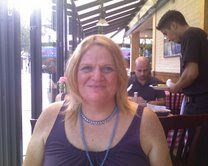
Some girls have all the luck, eh?  


My walk took me through past the quiet facades of brick houses.  Inside many of them, families--some consisting of two or three people who may or may not have been related to each other by blood, others that were, in essence, miniature villages--were eating those Sunday meals that are neither lunch nor dinner because they encompass and eclipse both.  Nobody partakes in such a repast if he or she is living alone, and not many young couples or roommates do it.  In other words, it's not for those who "do brunch." The sort of Sunday meal I mean is, almost by definition, a family affair. And, as often as not, it follows said family returning from mass or some other religious gathering--especially one of a Sunday like yesterday, which happened to be Palm Sunday.


Even when the bustle spilled out of doors, the streets were still enveloped in that silence--proscribed and followed as if by some unseen, unheard command--that has sealed the people inside those houses away from the cries that, perhaps, they don't or can't see.  Or, by now those voices may be, as far as most people are concerned, mere background noise, like the shows that blare from their televisions during their meals.   


I first noticed that silence--that of damp Sunday afternoons--some time during my childhood.  It seemed to grow more intense, somehow, a year or so into the USA's invasion of Iraq.  By that time, armed Americans had been plying the valleys of Afghanistan for a few years, though it and the Iraq invasion seemed to have endured for far, far longer.  


Some of the funerals that resulted from those imperialist misadventures have, I'm sure, taken place in some along some of those streets I walked.  I saw more than a few flags and banners--and bumper stickers on the parked cars--that read "Support Our Troops" or "Semper Fi."  


What's interesting is that in those working-class Queens neighborhoods--home to many immigrants, some of whom are Muslims--one doesn't find the more overtly aggressive and violent messages (e.g., the bumper sticker that's a "license" to hunt terrorists and features a photo of Bin Laden with a target drawn over it) one finds in other areas.  Instead, people in the areas I saw today seem to have the idea that by "supporting" the troops (whatever that means) or "remembering" 9/11, they are showing that they are loyal Americans.  Given the political and social climate--and what it could become if the economy worsens--I can understand why they'd feel the need to do that.


So why am I talking about the wars or immigrants now?  I don't know.  I just got there somehow, just as I somehow ended up four miles from home on my walk yesterday.


Well, all right:  I think about those wars a lot.  The invasion of Iraq started not long after I'd begun to take hormones and was preparing myself to live full-time as Justine.  I recall understanding, for the first time in my life, that invading another country--especially if no citizen of said country has ever done anything to harm any member of the invading country--cannot be anything but an expression, on the part of the invaders, of profound disrespect for people who just happen to be different from themselves.  I understood, for the first time, that up to that point in my life, I had been part of the very structure--even if I were at the bottom-most rung of its ladder and owned almost nothing of its spoils--that not only carries out such invasions, but doesn't see them as such.


Of course, I wasn't thinking that during my walk--at least, not consciously.  There were only the silence of those streets, the dampness of the air and the rhythm of my steps, all of which somehow kept me walking.

24 October 2009

How I Became Bourgeois In The Storm


Today I took one of the strangest walks I've ever had. It wasn't particularly long, distance-wise--at least, not in the scheme of walks I've taken throughout my life. But in terms of time, it was one of the longest walks I've taken in years.

Perhaps it seemed so because there was no moon tonight. Rather, rain fell throughout the night, sometimes torrentially, other times just barely more than a drizzle. (One thing that hasn't changed: I am still the sort of person who prefers a drizzle in Paris to a storm on Long Island.) When rain cascaded from the sky, I ducked for cover in two coffee shops, a Rite Aid and a Brazilian gift shop. And I also spent some time in a Home Depot store, where I bought some material for a small (at least, I expect it to be) project.

Anyway...Even though I walked streets along which I sometimes shop and through which I pass when I ride my bike to work (which, of course, I haven't done since June), I felt--for a moment, anyway--that I was taking a tour of my past, even though that was not my intention.

That feeling came to me after I turned the corner of 46th Street at 34th Avenue just after crossing Northern Boulevard. That block of 46th Street is lined with row houses that have pitched roofs in a sort of Tudor style. Interestingly, they are more vivid on a night like tonight than they are under a moonlit sky: Their shape does not lend itself to silhouettes. Nor does the light that fills, but never seems to escape from, the windows of those houses: It makes the lines of those windows and roofs all the more stark in the darkness.

In other words, you know that there are people inside those houses. But you never see them, much less the lives they lead.

Somehow, though, I imagine those lives to be in symmetry with the sharp lines of those houses reflected in the rain-slicked street. Although the street was quiet--almost eerily so for an urban neighborhood--I could almost hear, inside of me, conversations that did nothing to disturb the instrumental music--all muted strings, no human voices--playing in the background, possibly on one of the "beautiful music" stations on the radio.

Less than a mile, but about four decades, from that street lived my great-aunt and uncle. When I was a kid, we used to go there every once in a while. My brothers and I liked it because his house was near LaGuardia Airport, and sometimes Uncle Jim would take us to see the planes taking off and landing. Plus, even though his house was actually smaller than the one in which my brothers, Mom and Dad and I were living, it seemed so much more opulent. Cut-glass dishes in shades of cobalt and crimson rested on a dark wooden coffee table that seemed almost Oriental, at least to my eyes at the time; those dishes were filled, though not overflowing, with small hard candies. And we sat on a sofa upholstered with a velvety material (I thought it was real velvet.) in a claret hue.

My great-uncle Jim, who had been a prizefighter in his youth, went into business and eventually bought that house we were visiting. Of course, I didn't know the word bourgeois in those days, and when I did learn it, the context in which I learned it gave it a negative connotation. However, I would realize much later that it fit that house, and the lives he and my great-aunt Minnie were living in it, perfectly.

Also much later, I would understand that their house (He always said it, and everything else, belonged to both of them.) and the lives they were living in it were a refuge from, and a buffer against, the storms that were never far away--from their lives, or anyone else's. He had grown up poor and had fought in boxing rings and on battle fields. By the time I knew him, he had renounced both. From what I heard, my great-aunt was behind that: She belonged to a church, I forget which, that espoused pacifism.

Back in those days, the Vietnam War was raging and, in part as a response to it, young people all over the nation protested violently. It was also during that time when the months from June through September came to be known as "riot season": Many years later, I would realize just how close my family and I came, on at least a couple of occasions, to the confrontations when we were on our way to or from that house, or other places.

Tonight I got caught in another kind of storm. My waterproof anorak kept me dry above my waist. But even as my feet were soaked, I walked with the knowledge that I was as secure as anyone who was inside one of those houses. You need to be at home in order to feel that way. Somehow I understood that back at Uncle Jim's and Aunt Minnie's house in Jackson Heights all those years ago.

Now I am, finally.