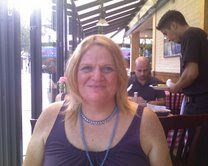
29 January 2011

Alchemy And Invisibilty

In the waiting area of Hannah and Her Sisters' nail salon, I was reading The Alchemist by Paulo Coelho.   A woman about my age, but of experiences and circumstances entirely different from my own, was looking at Cosmopolitan or one of the other magazines one typically finds in a beauty parlor.  (Is that term archaic?  My grandmother used it; I can't recall when I last heard it.)  I probably wouldn't have paid her any more attention had she not asked what I thought of the book.

"Well, I'm not finished with it yet.  But I can see why so many people liked it."

I could see she was disappointed with my response.  She probably wanted me to echo what her friends said about The Alchemist.  Perhaps I would have, had I read it earlier in my life.  Much earlier.  Not earlier in years so much as in my own life experiences.  By that yardstick, most of what happened to me before the age of 45 could just as well have happened to some Phoenician.

Anyway, you can tell already that I'm not impressed with the book.  I'm close to the end of it; I'll probably finish it when I take my bath tonight.  That would be entirely appropriate:  I usually go to bed after taking a bath.

I get the feeling that what makes some people love this book so much is that it has just about the same effect on their minds as a warm bath has on their bodies.  It is to literature as the stuff one feeds toddlers is to food.  

Lest you think I'm being a snotty, snooty English professor, let me explain something about both the book and my proclivities.  Like some of you, I have always found most self-help books annoying at best.  Believe me, I've read more of them--usually under duress--than anyone should.  They talk at you about finding your bliss or realizing your personal myth or some such thing.  They always assure you that, yes, you can do it, but you have to want it.  And if you want it enough, God or The Force or whatever will be on your side.  

I guess they're telling the truth.  After all, at least some people realize their dreams through those books.  I'm talking about their authors who, I suspect, wanted to make a pile of money.  And they all seem to accomplish that.  After all, as several characters in The Alchemist say, when you decide to pursue your own Personal Legend, the universe conspires to support you in that quest.  Someone said exactly the same thing when he was trying to get me to enroll in EST and I said--truthfully--that I didn't have the money.  He told me of people who'd just ate their last can of sardines and, upon deciding to enroll, got letters informing them of trust funds they didn't know they had. I won't argue with him, or Coelho, on that point:  After all, when the authors of these books (or the creators of self-actualization "training seminiars") decide that they want to make money, the forces-that-be seem to line up thousands, or even millions of suckers, er, customers.

The Alchemist is one of those self-help books disguised as a novel.  That makes it all the more annoying because of the book's tone:  It reminds you that its narrator is indeed telling you a fable and that there's a moral in it that you're supposed to learn.  When I first started to read the book, I thought the writing seemed simplistic but told myself that it might just be a matter of something lost in translation.  But I've read enough to have an idea of whether or not something may have been good in the original.  I didn't have that impression of Coelho's writing, at least not in this novel.

But what's bothering me most, aside from its preachiness and mind-numbing repetitiveness, is something that, earlier in my life, I might have noticed but accepted as part of the story:  Its overwhelming sexism.  The males in the story include the protagonist, an Andalusian shepherd boy who decides to literally follow a dream that, according to some old woman in a long skirt, says he will find his "treasure" by the Pyramids.  Now, I know Andalusian and Arab cultures are very different from any in which I've lived.  But I simply can't believe that anyone in those cultures, or any other, would speak the way any of those characters spoke, in any language. Their dialogue reminded me of what I used to hear on Saturday morning cartoons about scimitar-wielding malevolents. 

But you hear it all from the male characters.  The female characters, you hardly hear at all.  I've mentioned one already.  Another is a beautiful young woman the protagonist meets along the way.  And the lines Coelho puts in her mouth are just as improbable as those we hear from the male characters.  But worst of all, she and the seer are exempt or excluded from pursuing their own Personal Legends.  (Coelho actually uses that phrase on every other page.) And what are those personal legends? They're all quests of some kind or another:  finding treasures, winning battles, being successful as businessmen or professionals of one kind or another.  If the legends aren't inherently male (and I don't mean "masculine," whatever that means), the ways in which they're expressed are.  

If Robert Bly got the inspiration for his Iron John retreats from reading Jonathan Livingston Seagull, they might have been, or at least sounded, something like The Alchemist.  Or it's what JLS might've been like had it been written by Joseph Campbell.  

Now, to be fair, The Alchemist probably isn't any more sexist than JLS or anything Campbell or Bly wrote.  But I realized, in reading Coelho's work, that I could never be anything more than a spectator or an accessory in the world it depicts.  No other woman could fare, or hope for, any better.  


That, as much as anything else, disturbed me when reading the novel.  I had become aware, by degrees, of sexism in what I'd read and otherwise experienced long before I started my transition.   In fact, it was the first thing I disliked about Hemingway's work when I was in high school.  But what bothered me then was that the female characters weren't so deftly drawn. In other words, it was more of an aesthetic concern than anything else.  Even though I didn't care for much else about Hemingway's writing, I felt that at least it was a world I could enter and experience.  That is exactly what I didn't feel when reading "The Alchemist."  In fact, I think that for the first time in my life, I felt entirely outside of something I was reading.


Then again, I guess I shouldn't be surprised that I feel as I do about The Alchemist. I suppose that my experiences can and should change the way (and, possibly, what) I read.  After all, as my students and I were reading and discussing Ralph Ellison's Invisible Man last week, I couldn't help but to feel I was reading a very different novel from the one with the same name, and by the same author, I'd read more than thirty years ago.  It's a very different book, thankfully, from The Alchemist, if for no other reason than Ellison is a much better writer.  


I can make such a judgment because while Invisible Man is at least as sexist as The Alchemist, I don't feel the same alienation from the story and its characters that I felt while reading The Alchemist.  In addition to his narrative style, Ellison's writing distinguishes itself from his seeming intimacy with the people (the men, anyway) and their motives.  I could actually empathise with the narrator/protagonist of the book, even when he seems foolish.  That may be because I have experienced treachery and betrayal, not to mention outright violence, from people who were supposed to be "friends" of some "community" to which I (at least in their minds) belong.  And, even though the protagonist isn't always what I expect, at least I find his words and reactions plausible in the situations in which he finds himself.  Even the misogyny--which, by the way, comes as much from the protagonist as anyone or anything else in the book--seems plausible, if not defensible.  That's a lot more than I can say for The Alchemist.  And it's the reason why I may read Invisible Man again, but I'll probably leave my copy of The Alchemist for whoever wants to take it.


28 January 2011

Stopping Is Part Of The Journey


I can say with near-certainty that on this date at around this time, ten years ago, I was riding on rollers, which are a kind of treadmill for bicycles.  Back in those days, that's what I did during the winter.  Even after I stopped racing, I still was trying to prove something to myself.  Or, more precisely, to disprove something.

What was it?  Well, before I try to describe, let alone name, it, I have to say that what led me to ride rollers even after my racing days ended was the same thing that kept me training for soccer after I stopped playing it.  I knew full well that I would probably never play again and, even though I enjoyed playing, I wasn't mourning my acknowledgment that my playing days were over.  In fact, I felt surprisingly little.  But I still had the impulse to train as if I were still playing.

Something similar happened after I stopped racing.  Although I'm glad I raced, I wasn't upset when I knew that part of my life was about to end.  And once I "retired," I really had no urge to go back.  However, I wanted to know that I could.  

Why?  Well, I always want to feel as if I start or leave stages and challenges in my life on my own terms.  It's never a good feeling not to do something because you're not capable of it.  The worst of it is that you can't even kick yourself, in hindsight, for lack of effort if you simply didn't have whatever it took to do something that you wanted to do.

Perhaps I never got past or over being the ungraceful, unathletic pubescent child I was.  Until I started training and playing, I was taunted by other kids--and sometimes adults--not only for my seeming lack of athletic ability, but also for my perceived lack of manliness, or even the capacity for becoming a man, whatever that meant.

Those taunts were echoing in some recess of my brain.  That's the reason why, ironically, I spent more time on rollers and trainers in my early post-racing years than I did when I was actually racing.    In an irony within that irony, I was pushing my body--my male body--so hard because I was trying to poound it, or something about it, out of existence altogether, or at least into submission.

I've been on my bike once in the past two weeks.  I'm feeling antsy and hoping that I'm not gaining weight.  (At least I'm not eating any junk.)  But, at the same time, I'm not as ornery as I would've been back in the day.  When I couldn't ride--or after a few weeks of riding rollers or trainers--I used to feel resentful and angry that I couldn't do what I wanted to do but, it seemed, everybody else could.

I think that being off my bike for a few months after my surgery last year made me aware, for the first time in my life, that the times when you recuperate, or simply stop for whatever reasons, are also part of the journey. In fact, those times might be almost as important as the times when we're riding and training.   For some people, it's the only opportunity to reflect on the question of why they are doing whatever they do.

24 January 2011

Yes, We're Guilty. Aren't We Always?


I was "surfing" the radio when I heard the tail end of what seemed to be one of those talk shows geared toward white men who want to turn the clock back to 1945 or thereabouts.  Some right-wing blowhard (Yes, there are left-wing blowhards, too.) said something to the effect that this country is "arguing about gay marriage and gays in the military when we're losing the country."


By "losing the country", I'm sure that he meant that more foreigners are "taking over."  He probably wouldn't care, except that he feels the "changes" are threatening his position, or at least what he fancies it to be, in this country.


How can anyone claim to love this country and say that liberty--at least for, ahem, certain groups of people--sometimes has to take a "back seat" in times of crisis?   I mean, I really don't understand how a debate over gays in the military could have caused, among other things, the stock market crash of 2008 or the subprime mortgage mess. 


Oh, what do I know? 

23 January 2011

Unemployed and Homeless LGBTs: How Many?

The weather forecast is calling for the coldest night in six years.  

I can recall that cold spell.  It was like that winter:  It was brutal and seemed endless.  As I recall, the spring was just a brief respite--a truce, almost--between the cold and snow that seemed to blitz us every day, for longer than they should have,  and the blasts of  heat that came only a few weeks later.  

Back then, I was co-facilitating a group for young LGBT people.  What struck me then was how many of them had no place to go after that group.  A few went to the shelters; others wouldn't because of the violence that, when it didn't erupt in screams and blows, seemed to murmur in rumbles like fighting just on the other side of the line.  Almost no one chooses to go into a line of fire; no one should be foreced to do so.

Unfortunately, for some of those young people, the only alternative was another battle-zone:  the streets. Some spent the nights on them--under highway overpasses or in doorways, until they were chased out. At least three (that I knew of) went home--with whoever paid them, however little, for their bodies.  And one didn't even get paid:  All she got was to lie in a bed but not to sleep in it.  

Except for the times I've gone into a shelter, I never saw as many homeless people in one room as I did during those group sessions.  And, I certainly never saw so many young people who were so desperate.

I won't try to extrapolate what percentage of transgender youth are homeless or what percentage are unemployed, or whatever.  After all, nobody has an accurate count of how many of us there are.  Lots of us--like some members of that group--drop out of school and run away from home because of the beatings they got at school--or on the streets, or even at home.  They are known as boys or girls when they disappear from view of their peers and elders in their communities; they are not classified as transgender (or, for that matter, gay, lesbian or bisexual) in any of their identifying documentation.  They "fall between the cracks" of society's various systems.  

Plus, almost no one, it seems, agrees on who should be classified as LGBT.  If we count only the self-identified, we will miss many more because, if for no other reason,  so many fall "off the radar"--as some members of that group did--and therefore cannot be reached by researchers.  

From what I've just said, such statistics as the unemployment rates of LGBT people cannot be accurately measured  because young people who leave school and home have probably never worked, and therefore cannot be counted as unemployed.  Still others are, like a few members of that group, sex workers of one kind or another.  That's the only work some of them have ever done; tragically, it's the only work that some of them ever have the opportunity to do anything else.  Of course, anyone doing that kind, or any other illegal, work is, as they say, "off the books."

It's widely known that the US Census misses a lot of people.  Many others don't comply with it, and still others give only the barest minimum of information on the Census questionnaires.  So if one of the largest and best-funded operations of its kind can't even find all taxpaying citizens, how can anyone hope to do an accurate count people who never had the opportunity to participate in the legal economy?

So, no one may ever have an accurate count of us, never mind how many of us are homeless, unemployed or victims of crime, including murder.  I am almost entirely certain, however, that we are overrepresented in those categories.  

20 January 2011

OK Now


Yesterday I bumped into somebody I hadn't seen in about two years.  Suzanne and I used to work together; now she's working for herself.  She seems happier--or, at least more "centered", to steal from the lexicon of the so-called New Age movement.  

Some of our colleagues thought she was ditzy.  Truth is, she is, at least about tedious, repetitive tasks--which, I've learned, are the ones you have to do well if you want to win favor with superiors and, often, peers.

But she is far more perceptive in other ways than her detractors could ever dream of being.  And, she does have a heart, even if it leads her to minor excesses.

So I wasn't surprised at her reaction when I mentioned that I've had my operation since I last saw her. Her face took on an expression I hadn't seen before:  a combination of joy and concern.  "That's great!," she exclaimed.  Then, literally in the next breath, "Are you OK?", as if I'd been through a long, painful night.   When I assured her that I've been fine, in some ways I've never been better, she gave me a long hug.  

Afterward, her question--"Are you OK?"--seemed even stranger to me than it did when she asked it.  Although the surgery, like any other, had risks, I felt that whatever I was enduring was less treacherous than just about anything I'd experienced before it.  Some of that, of course, had to do with the trust I had in Dr. Bowers and the staff at the hospital.  But the emotional distress I felt nearly every day before I started my transition was much worse, and in some ways more dangerous, because I had no idea of how or whether any of it would end. And I never saw the purpose of it:  I'm not so sure that it built my "character."  On the other hand, I at least knew why I was undergoing my transition and surgery, and had some idea of how to achieve what I wanted to achieve by becoming Justine.

Yes, Suzanne, I am OK.  I'm still learning about this new landscape I'm navigating, but it makes sense.  And, as you said, We have to keep on learning how to be ourselves.   Yes!  Thank you, Suzanne.

19 January 2011

Along The Way

The strange thing about goals is that, so often, when you reach them, they turn out not to be goals after all.  You realize that they were just landmarks or mileage markers.  Or they were just check-points in which you had to get some imprimatur or another before proceeding.

I'm thinking now about the stages of my transition, and my early life.  I mean what most people would call my current or post-transition life.  Before I came here, taking hormones, getting my name changed, and various other events leading up to my surgery, seemed like destinations at which I'd arrived.  Of course, I always had a longer-term vision of how I wanted to live, as a woman.  But each of those events and accomplishments seemed, at least for the moment, to be like grand train or bus terminals.  Of course, for some people, they mark the end of their trips.  But, for many others, it's just a station on the way to someplace else.

One of the office assistants at work--at the college in which I'd been moonlighting last semester--helped me to realize what I've just said.  The surgery and the events leading up to it were just preludes or prerequisites to what I would do next.  They were not goals unto themselves.  


In talking to that office assistant, I realized that if I'm not at a goal or destination, I'm at least on the road I hoped to take.  Or, at least, it bears a strong resemblance to what I hoped to have.  


I asked her whether the department chair would think I was doing something shady when I talked to a young woman who'd come for an interview.  She was in the office; I asked if I could help.  I forgot what she asked, but I sensed that she just wanted to talk to someone who's encouraging, or at least friendly.  The assistant and the department chair both saw me talking to this young woman.  "I hope she doesn't think I was coaching her or doing something I shouldn't be?"


The assistant's looked at me with a touch of pity.  "We're not like that around here," she assured me.  I wondered if she knows about some of the experiences I've had at my other school.


"I'm sorry."


"Don't worry.  You'll get used to this.  Besides, I think what you did was nice.  And she seemed happy about it," referring to the young woman.


But something in that assistant's tone told me so much more.  I hadn't heard anything like it at work in a long time.  I realized, then, the real reason why I like this new school:  I don't have to explain or defend myself.  To her, to the department chair, to my colleagues and students, I'm just a middle-aged woman who's teaching there.   There aren't any qualifiers, from me or them. And, best of all, I haven't encountered the sort of people who wants me to talk about my history and share it with my students precisely so they can use it against me.  


Just a woman going to work.  Maybe this isn't the goal or destination.  But I'd hoped to come this way.  Even so, every once in a while I need someone to remind me of where I've come.  

16 January 2011

Third, Or Not Specified

Lately I've read a couple of interesting gender-related stories.  One comes from Nepal, the other from Australia.


In the conservative Himalayan nation, which was a monarchy less than three years ago, this year's census will include a "third gender" category. This action came as a result of an order from that country's Supreme Court  mandating that the government encact laws to protect transgender people.


I think it's interesting that such things should happen in such a conservative country.  Then again, Spain, which was considered one of the most conservative and staunchly Catholic countries in Europe, if not the world, legalized gay marriage a few years ago.  So, a couple of years ago,  did Iowa, which--depending on whose definition you accept--is at least partially in the Bible Belt.


So why would jurisdictions not known for being avant garde do something that sanctions what many of its citizens oppose, at least in theory?


I think that answer can be found at least in part in something a Nepalese official said about being able to count and locate transgender people.  Governments everywhere like to keep tabs on people. And conservatives like order, or at least the appearance of it.  I am reminded of something that a Dutch minister once said about his country:  Its "liberal" policies, like the legality of marijuana, are actually rooted in the deeply bourgeois Calvinism that defined the country for centuries.  Nobody, he explained, likes order more than a Calvinist, or someone who's been influenced by Calvinism.  So, he said, by legalizing marijuana and prostitution, providers and customers are no longer criminals and are instead citizens who are bound by the responsibilities of, and entitled to the protections of, Dutch civil law.  In other words, the government can keep some kind of control over them.


That, by the way, one reason (along with having a gay daughter) why Dick Cheney has voiced his support for gay marriage, while Barack has not.


Speaking of control:  How much of it can anyone have over someone who's gender is "not specified?"  That's the case of  Norrie, a 49-year-old Australian who was born male and had gender reassignment surgery twenty years ago.   Norrie, who goes by only one name, was "ecstatic" about surgery but frustrated over having to take hormones and over dating men who, when they "found out I was a trannie, told me I wasn't female."  Some of them threatened violence.


Finally, Norrie decided "Nobody can define me as male, and nobody can define me as female."  Two doctors agreed and, as a result, Norrie now has papers that say "Sex Not Specified."    


In one sense, I'm happy to see this.  I have long felt that there are more than two genders.  While I am female in my mind and spirit, I know that some things about me are, and will always be, male.  Some have to do with my experiences, but I think that others have to do with innate characteristics.  I am content, and in many ways comfortable, in living as what most people would see as a straight woman (even if I am, in fact, bisexual).  I claim my right to so live; at the same time, I support the right of people to be more androgynous or to live by whatever else their gender identity and sexuality might be.


On the other hand, the ruling puts Norrie in a bind:  Her gender identity, while unbound from the gender binary, is still defined by the government, which could (at least in theory) change Norrie's status as it sees fit.  Keeping Norrie and other people dependent on a government to define who they are can't be anything but limiting.  Under those circumstances, how does one travel, particulary to a place that rigidly enforces the gender binary and still outlaws all forms of sex that don't involve a man getting on top of a woman.  


Still, I think that the Australian Government's issuing documents in your name without the gender distinction is one the better things that could have happened for a lot of people.Some day, perhaps (though probably not in my lifetime) people will have the liberty as well as the means to live by whatever they think is right for them. 

07 January 2011

Eighteen Months

Today is exactly a year and a half since my surgery.  It's hard to believe that it went by so quickly.  


I haven't heard from my Trinidad "classmates" in a while.  Maybe I'll give them a call or e-mail them tomorrow.  Hmm....I wonder whether they'd prefer not to hear from me.  After all, our surgeries and our stays in Trinidad are receding further into the past.  I'm not thinking much about them now.  Then again, that may just because I've been busy.


There is certainly something to be said for the experience receding into the background, if you will.  After all, while the surgery was a goal, it wasn't and isn't  the point or purpose of my transition.  It was just another step along the way, albeit a major one.


Now I'm teaching a class in a place where that's all I have to do.  And the people have been friendly, but not intrusive.   I'm starting to feel I'd like a full-time job there, should one become available.  It's really nice simply to go to work as a woman named Justine, or Professor Valinotti.  (I must admit, though, I like "Professor Justine," which some of my students call me, even better.)


I feel that simply working and living as Justine, with no need to explain who or what I am, is reason enough for what I did eighteen months ago.

02 January 2011

No New Year's Resolutions

I've learned long ago not to make New Year's resolutions.  It has nothing to do with any fear of breaking them: Lady knows, I've broken enough of them.  Rather, I've come to realize that anything that is necessary or simply worthwhile doesn't need a holiday or other special date.  Anyway, it's events that make days and dates special, not the other way around.  And any significant change I've made in my life began when I needed it and it needed to begin.

One, of course is my transition.

31 December 2010

At The End of 2010: Leaving The Past, Again

Nobody I know seems sorry that 2010 is ending.  I realized this tonight, when Mom, Dad and I were having dinner at the Mezza Luna restaurant (highly recommended!) in the European Village of Palm Coast.  The owner, who greeted customers after they were seated, said he was worried about business earlier this month. The economy is bad everywhere, but particularly in Florida.  It might be better here than in Detroit, but that's like saying that the North Pole isn't as cold as the South Pole.

I won't say "good riddance" to this year.  It wasn't great, but it wasn't awful, either.  More than anything, I'd say this was a transitional, or perhaps developmental, year.  It was my first full year after my operation, which means that I am still learning new things about my body, myself and my world.  Probably the most important change I'm seeing is in the ways in which I see other people. 

Probably the most interesting, and sometimes difficult, thing I've learned is how to look at my past without either hatred or sentimentality.  In some ways, what I had thought of as my past wasn't really mine after all.  I have come to suspect that, at least to some degree, this is the experience of most women.  As she was leaving Torvald, Nora (in A Doll's House) said that she went from being her father's property to Torvald's property.  Her ideas, opinions and wishes--and her very life itself--were therefore never her own; she took secondhand versions of what those two men in her life offered, if she got anything at all.

My life, before my transition, was a variation on that:  I was trying to fit, or make myself fit into, the ideas, wishes, wants, dreams and accomplishments of men, most of whom I didn't even know.  All I knew was that they didn't fit me any more than I could fit into them.  I could no more become the military officer my father had wanted me to become (To his credit, I think he came to understand that.) than I could become the next Kareem Abdul-Jabbar.  It wasn't only a matter of being more than a foot shorter than the basketball legend; it also a matter of my emotional--and, according to the medical tests I would undergo much later---hormonal makeup.

Now I am just beginning to discover what my strengths as well as my interests are.  I don't know how long I will continue to do that:  In some ways it's exhiliarating, but at other times I wish I could be more settled.  But then again, I sometimes think that I always was and always will be in a state of flux.

So 2010 was a year of transition and development.  It's probably the sort of year I needed to have.

30 December 2010

Lunch With My Mother And Her Friend

When I was a teenager, I enjoyed the company of my mother's friends, especially two in particular.  Mrs. Orzel and Mrs. De Land were both very intelligent and interesting people, and I always noticed that my mother was happier and more confident when she was around them.  Maybe that was the reason why I enjoyed being around them:  They made my mother into the person I knew she really was.

Of course, even though I never sensed that they were speaking to me with condescension, I knew even then that I could not consider them as friends or peers.  They were my mother's age, give or take, and I was less than half that.  And, of course, I was living as a boy.  Perhaps they knew that, at least in some ways, I was different from the others.  Those differences may well have been the reason why we got along and I actually preferred spending time with them than with my so-called peers.

My mother is still in touch with Mrs. Orzel who, like her daughter,  has been battling cancer in another part of the country.  She has sent her regards to me, and I've sent mine to her, through my mother.  Sometimes I think I'd like to see her again.

Yesterday I had the sort of encounter I would like to have with Mrs. Orzel--with another of my mother's friends.  We all went to lunch at the local Ruby Tuesday.  And I saw the same sort of change in my mother I used to see when she was around her friends all those years ago:  She was a happier and more confident person.  That has something to do with the fact that her friend can empathise with her in ways that my father, whatever his other virtues, never could.

Fortunately for my mother, this friend lives very close by.  They play bingo together, along with a few other female friends about their age, and sometimes they get together for lunch.  My mother's friend is almost the definition of a "lovely" person:  You feel good about yourself, and a sense of peace, when you're around her.  And I felt that she not only accepted, but welcomed, me.  Perhaps my being my mother's daughter was reason enough for her.  That's fine with me.  I never had the sense she was "tolerating" me.

I have always felt close to my mother.  But I have had, lately, the sense that our relationship is going to change.  I could not say how; I still don't think I can.  However, I think that perhaps some emotional channel of which I'd previously been unaware will open up.  It may well have to do with the wishes I had when I was talking with my mother's friends all of those years ago.

29 December 2010

What Would You Give Up To Get Out?

Should someone's parole be predicated on her donating a kidney to her sister?

That's what's happening in Mississippi.  The two sisters were convicted of armed robbery and have served sixteen years in prison for it.  Some have argued that they've been there much too long, as they were teenagers when they, with another teenager, ambushed two men whom they hit over their heads with guns.

For their troubles, the youngsters got $11.

Technically, Mississippi Governor Hayley Barbour indefinitely suspended the sentences of the two sisters.  An indefinite suspension is different from a commutation or pardon because it has conditions attached to it. If those conditions aren't met, the person with the indefinite suspension could be returned to prison.  However, according to reports, the sister who's donating her kidney volunteered to do so. 

Some would say this is a win-win situation.  However, as someone who wants to keep the government as far from her body as possible, this situation seems more than a little creepy to me.  Could a state actually mandate, say, an organ donation as a condition of release?  Or could it demand that someone to simply surrender some part of his or her body? How far is that from the Middle Eastern practice of chopping the hands off accused thieves?

28 December 2010

Cycling Under A Sword of Damocles

This is one way you know you're in The South (and I ain't talkin' about the Bronx):


Between this bike/pedestrian path and the ocean is a strip of land about 200 yards wide, consisting of more trees-- like the one in the photo-- with moss cascading from them, interrupted by roadside ice cream and hot dog stands, biker bars, gated communities and a Publix supermarket. Between this bike/pedestrian path and the Inland Waterway are a couple of state parks, a couple of convenience store/gas stations, a couple more biker bars and a couple of "professional buildings."


I stopped in one of the convenience store/gas stations. The latter is owned by Citgo, but the store is part of a local chain called Jiffy. This part of Florida, like much of the US, has experienced its coldest weather on record for this time of year. So, I had a yen for something I never craved in my previous trips down here: hot chocolate. Also, I started the day with a headache, which I incorrectly thought I could pedal off. So I also wanted aspirin.

 
While there, I got talking with Sharon, the store manager. I can best describe her as a redneck wife, and I don't necessarily mean that disparagingly. She's somewhere between my and my parents' age and has lived all of her life in this area. Business was slow, she said, but that's how it is everywhere: "Nobody has any money."


She said she'd seen a report saying that the county in which her store is located--and in which my parents live--has the highest unemployment rate in the country. It's hard not to believe that: Everywhere I've pedalled, and every place I've gone with my parents, I've seen empty stores and condo buildings. A so-called European Village consists of a pedestrian plaza ringed with restaurants and shops, about half of which were vacant. When I last saw it, two years ago, all of the spaces were occupied and business, although not booming, had yet to be wracked by the ravages of the implosion of the local and national economy.


Sharon says she's never seen anything this bad. In a nearby town, where she sometimes has to go on business, she sees "kids with eighteen siblings, and none of them have the same father." And, she says, "They're white."


Five years ago, someone with no job, no income and no assets could get a loan to buy a house. Today, this county and other places are full of young people with no job, no education and no future. Now, if they had education, they'd be like certain young people in the Northwest of England nearly four decades ago. What did they do? They became the Johnny Rottens and Sid Viciouses of this world. If, instead of education, they had religious dogma, they'd be suicide bombers.


But those young men and women truly believe in nothing at all. At least, they're not willing to die for anything, and they're living, not for the future, not for (much less in) the moment, and not even for the present or the Eternal Present. Instead, they are in a chasm that cannot be filled with anything, not even their own deaths.


You can see it on their faces. In fact, during the time Sharon and I were talking to each other, three of them--the "rock-heads," as she called them, came into the store. One young man used the bathroom and left; a girl, younger, tried to buy cigarettes and another bought a case of beer.


"You've got to watch out for them," she warned me.


"They look pretty scary."


"You're on your bicycle. You're a woman riding alone. Around here, that can be dangerous, epecially between here and the bridge."


"What do you mean?"


"They attack people and rob them. And sometimes they do worse."


I thanked her for her advice and wished her a happy new year. And she wished me a safe trip, which I continued under the trees with moss hanging from them.


27 December 2010

How Do You Do, Ma'am?

This is the third time I have come to Florida to see my parents as Justine.  And it's my first visit since my surgery.

Each of my first two visits lasted a week. This is my third (fourth, if you count my arrival) day of this visit.  And I noticed something that I noticed on each of my previous visits:  Everyone addresses me as, "Hello ma'am,"  "How do you do, ma'am?"  (Are they asking for instructions?  Little do they know...I can give them!)  or "Nice day, isn't it, ma'am?"  Once in a while, someone refers to me as "miss."  But every other time, I am presumed to be a woman of a certain age--which, of course, is what I am.

Now, I am long past the thrill of "passing."  In fact, I am grateful that even during my last visit as Nick--the one in which I "came out" to my parents--I didn't even get a second look, much less a squint or furrowed eyebrow, from anyone who asked how "ma'am" was doing.  You see, I have no idea (and, frankly, don't want to have any idea) of what could happen if anyone had any inkling that I was once a native of Mars, so to speak.

It doesn't matter whether I'm wearing a skirt and makeup, or whether I'm in baggy sweats like the ones I wore today.  I still get the same greetings and responses.  The women are almost invariably cordial, and the men are be polite, chauvinistic or solicitous.  Have I become who I am as deeply as I like to believe I have?  Or are people down here less savvy about these things?

Or am I just a parochial Yankee who still carries, in her mind, stereotypes about people in this part of the world?  If  I am, I apologize!

25 December 2010

Carrying On

I know, I haven't been writing much in this blog.  Part of the reason for that is the semester that just ended:  Over the last two weeks, I had almost no time for anyting that wasn't school-related. 

But the truth includes something else:  I simply haven't been thinking as much about the issues and experiences I'd been writing about in this blog as I was when I was first writing in it, or during the days leading up to, and immediately following, my surgery.  Perhaps, that's exactly the point of going through a gender transition and gender-reassignment surgery.  I saw that as a destination, or at least a goal, when I started on this journey.  When you've lived your whole life in conflict, not having to think about it sounds very, very appealing.  And, of course, the very appeal of something is enough to make it a dream, a destination or a goal.

I am not sure that I will never have to think about my gender identity again.  But I am in situations now where I really don't have to talk about it, or at least where nobody's brought up the subject and I haven't said anything.  And now I am at my parents' house in Florida.  Wherever I go here, people address me as ma'am and I don't even think of it as a victory, or anything in particular, anymore.  It's just who I am and the way I relate to the world, and it relates to me.

And then of course there is my parents' acceptance of who I am, as difficult as that has been for them at times.  When you find acceptance, or at least tolerance, you don't have as much need to explain or defend yourself as you do in other situations.  My life seems to include fewer and fewer of those other situations.  Perhaps there will be changes that will eliminate those situations that remain.

So...You will probably see less and less on this blog. This isn't to say that I'm ending it; perhaps only my unwillingness to let go will keep it going, however sporadically.  As you may know, I have another blog, about cycling.  Perhaps some of my other interests will lead me to start another new blog; it may or may not be a spin-off of this one.  But whatever I do will be motivated by my curiosity, love of writing and desire to connect with anyone who might be receptive to what I represent, even if he or she doesn't agree with what I say or like what I do.  Becoming a woman, becoming one's own person, is always an ongoing process.  Whether on this blog or some other, or in another venue altogether, I plan to continue that, and nothing more or less.

20 December 2010

The Sexes at The End of The Semester

Well, I know one thing:  The end of the semester is basically the same sort of grind, whether you're male or female.


Actually, there is one difference that I've seen.  It seems that when you're a female faculty member, you're expected to be more sensitive and understanding when a student wants to make up the work he or she hadn't done since Labor Day and you're expected to have time and not to even think about saying "no" when someone has an "emergency" of some sort. Said "emergencies" usually happen because of some change in regulations or someone's lack of planning.


And, as I was telling the prof with whom I rode last week, I hear some of the same "sob" stories that I've always heard at the ends of semesters.  The difference is in that when I was a Professor Nick, I used to hear the stories mainly from female students.  And, as I half-jokingly told the cycling prof, with every tear they shed, I could see their skirts hiking up another inch.  


Now I find that the female students try to wrench me with sheer emotion.  That doesn't surprise me:  It's almost trite to say that women do relate to each other emotionally more than, or at least in different ways from, men.  On the other hand, some of the male students think they can charm me, as they think they can charm any other female, into cutting them some slack.  Not all are like that, but enough that I notice and expect it.  


That prof, and a couple of others, have told me that what I'm experiencing now is "typical."   If those male students are, or are trying to be so unctuous with me, I can only imagine how much of that sort of behavior those other profs--especially the one with hom I rode--experience.

19 December 2010

In The Book: Yesterday, And Before

Last night I got six hours of sleep. That's about as much as I'd gotten during the whole week before.  Really.


I think now of what I told my brother:  This time of year (and May) are to college instructors (especially those of us in English) what tax season is to accountants.  We find out how much work we can get done on how little sleep.  And we discover forms of caffeine and refined sugar we never knew existed.  Some of us, of course, partake of substances with more mysterious provenances.  I haven't done anything like that in almost half of my life.  I guess that's something of an accomplishment.


Yesterday I got a little surprise in the mail.  No, it wasn't a Christmas present from a mysterious admirer.  At first I didn't recognize the address or the name of the company from which it came.  All I could tell, by the shape and feel of the envelope, was that it was a large paperbound book of some sort.


That book contains something I wrote a few years ago.  It had been rejected by a site that was regularly publishing my stuff.  The editor said it was "too controversial" and "too advanced" for his readership.  That meant, of course, that some of his donors would stop writing checks.  So I could understand why he rejected the piece, even if I wasn't happy about  it.  


Now I wonder how many people will read and buy that book.  Probably few, if any, of my colleagues, either in the schools in which I work or in the academic world generally, will see it.  The opinions expressed in some of the pieces in the book would absolutely appall almost anybody in an English Department and in other parts of academia.  Hey, some of the things I wrote in it would break up a friendship or two.


I stand by what I said in the essay.  However, in reading that piece again--which, frankly, I hadn't since the editor of the book accepted it four years ago-- I was reminded of the things in my life that have changed, and how I've changed.  In fact, in reading that piece again, I felt almost as distant from it as I feel from some things I did before I started my gender transition.   I wrote that essay from the perspective--which was mine at the time I wrote it--of someone who had been living in her "new" gender and taking hormones for a couple of years, and who was preparing herself for surgery that, truthfully, she had no idea of when she would experience. 


It's really strange to prepare yourself for something when you have no idea of when or whether it will come to pass.  People do it all the time: Much of the practice of organized religion has to do with it.  That makes it no less strange.  I could say the same for people in other areas of life who prepare for things that may or may not happen.   How odd a thing it is to do did not occupy my mind, even momentarily, before I re-read my old essay.


If nothing else, seeing that old piece made something make sense for me:  Why do some of us want to change one thing or another after undergoing transitions (whether or not they have to do with gender identity)?   In my case, the person who came into those things no longer exists, any more than did the guy named Nick who left me his life.  If the person I was during the early days of my transition belongs to yesterday, the man in whose identity I lived belongs to a time before yesterday.  In that sense, the recent and distant past are the same:  They're both gone.  All I can do now is read and look at what they've left me.  

15 December 2010

Directives Growing

Yesterday I told my brother that this time of year is, for those of us who teach in colleges and universities, like tax time is for accountants.  That means piles of papers that think you're shrinking until you stop for a minute and turn around. Then, like the brooms in Fantasia, they multiply.

And everybody's stories are getting longer.  There are those students who, if they spent half as much time doing the work as they are in telling me why they've missed work.  But they're not half as bad as those long-winded authority figures whose directives are growing longer.  (How would the world be different if someone told Pinocchio that his directive was growing.)  How would my life be different had I succumbed to a man whose directive was groing longer?

You know it's really late and I'm really tired if I'm asking questions like those!

12 December 2010

He Had No Future; I Have No Past

Not long ago, in the course of a conversation, I recalled something I hadn't thought about in a long time.  During my senior year in high school, I was on the committee that planned and arranged our class's senior prom.  I think I got involved with it because the faculty advisor taught a course in which I needed a grade I couldn't earn otherwise.  

That class wasn't required for graduation.  However, doing well in it might have helped me to get into a few schools and programs other people wanted me to get into.  I had no other reason to take that class or, truth be told, to be on that committee or to do almost anything else I did that year.  

I knew full well that once I graduated, I probably wouldn't be back.  My guidance counselor, who might not have been useless if he hadn't tried to drown sorrows that could swim, said as much.  It probably was the one useful or relevant, let alone prescient, thing he said to me.

What I also knew, somehow, was that I wasn't going to the prom that I was helping to plan.  Of course, I didn't tell anyone that; it wouldn't have made any more sense to them than it did to me.  If nothing else, I was learning one of the most important lessons of my life:  What makes sense and what's true are not always the same thing.

And the most essential truth--or so it seemed-- about me made absolutely no sense to me at that time.  I'm referring, of course, to my gender identity.  Nearly every day, I had to play that mental game of ping-pong:  "Your'e a man.  No I'm not.  You have a penis.  It's really a big clitoris.  You like girls.  Yes, but not only in that way.   You're an athlete.  Just like how many other women?

My understanding of gender and sexuality was so primitive--though not any less advanced than that of most people in that place and time--that I simply could not even think of showing up at the prom with another girl.  No girl in that milieu would have done that.  And I couldn't have gone with a boy, either:   No boy, no matter his identity and orientation, would have gone with another boy, even if he was really a girl who just happened to have a boy's body.

That, by the way, is the main  reason I didn't date when I was in high school, in spite of my father's and other adults' efforts to hook me up with someone or another's daughter.  My status as dateless became my ostensible reason for not attending the prom I helped to plan.  In addition, I told myself that it was silly to spend lots of money and energy over people and a place I would never, and had no wish to, see again.

I am just starting to realize how that experience affected me.  It's a reason why there are so many things to which I woulfddn't commit myself: I so often feel as if my efforts were for things of which I could never partake, and that I was always serving people who were living lives completely different form any I could, or wanted to, live.  

Every LGBT person has felt, at some time or another,  something like what I've described.  We are paying for, and in other ways serving, a society and economy that supports institutions--including marriage, as the law and most people define it--in which we cannot participate.  And I have often felt that my job as an educator is to prepare people to live in that sort of familial and societal arrangement.  

It's difficult to be involved in organizations and institutions when you know that you cannot benefit from the fruits of the labor you put into it.  It's impossible to have any enthusiasm for more than a relatively short period of time when you don't even have the right to be yourself as you're helping others to realize their dreams.  And it's none too encouraging when you can't get the people with and for whom you're working that they are operating from, and their expectations of you are therefore based upon, privilege and a sense of entitlement that they very often don't even realize they have.


I'm thinking about all of this now after learning that someone with whom I spent some time--a friend of an ex--died recently.  He was smarter, and far more creative, than I or almost anyone else could ever hope to be.  Yet he never went to college, in spite of offers of full-ride scholarships from very respected institutions.  He did well financially, and in other ways, and he wasn't boasting when he said he succeeded without much planning.  In fact, very little in his life was premeditated.  


The reason, he once told me, is that he knew that, for one thing, as a gay man, he wouldn't be able to live the sort of life for which schools and other institutions would have prepared him.  (That, interestingly enough, is the only way in which I ever heard him talk about his sexual orientation.)  And, for  another, he knew--not expected, knew--that he wasn't going to live to be fifty.  All of the men in his family had a congenital heart condition that killed them before they finished their fifth decade.  That condition is one of the few things, along with bloodlines, that he shared with them.  


So he knew that he wasn't going to be part of a nuclear family and collect Social Security in addition to a pension.  You can imagine how he must have felt about paying into that system, especially because he always was a business proprietor or an independent contractor of some sort.  


Why should I prepare for a future I won't have?, he asked.  Had I been more aware and articulate, I would have been asked that same question.  Why am I helping to plan a prom I won't attend?  


The difference, of course, is that I did have a future.  It just wasn't the one anyone was planning for me, or preparing me for.  Some of what I did to prepare that future has been useful to me; so much else wasn't.   But I can say that I do have a future of some sort, even if it isn't a very long one or one that nobody can predict.  Now, in some way, what I don't have is the past--or, specifically, my past.  Preparing for someone else's life, of course, meant that I was living someone else's life.  And there's never any future in that.


09 December 2010

December: Nights Growing

The days are getting shorter and colder.  But my work days seem to be getting longer.  Perhaps that's just as well, for now.  At this time of year, I start to feel some of the grief I seem to feel when the holidays draw near.  That has to do with the deaths I have experienced in December:  Uncle Sonny, Kevin, Cori and Adam.  And the terrible thing about them is that they were all unexpected yet inevitable.


Don't get me wrong: I can have a lot of fun at holiday time, mainly because a few years ago, I decided that I would.  But one of the reasons why I made up my mind to enjoy it was that this time of year could be, and has been, hard for me.

08 December 2010

Seeing By The Light of Othello

It's cold and I'm really tired.  Charlie curls up on me and falls alseep; I also find myself drifting off.

It's that time in the semester when you read papers from a stack and, just when you think you're finished, the stack grows.

Some things never end:  like LGBT kids getting abuse and worse from family members and school mates, not to mention teachers. Yesterday, one of my students talked to me about it.  She's ostracized  for wearing baggy men's clothing, and her conservative mother--who comes from a culture not noted for its tolerance of queer people--has been telling her "I wanted a girl, not a boy!"

She said something else I found interesting, in reference to a video of Shakespeare's Othello:  "It's so gay.  Didn't anyone else see that?"

She had missed the previous class when I mentioned that some commentators have suggested that Iago tries to destroy Othello's marriage to Desdemona, not so he can have her to himself, but so he can have Othello to himself, if you know what I mean.  I'm not the first one who's ever mentioned that possiblity:  One of my profs did, more years ago than I'll admit, and I've read that interpretation of Iago's motives elsewhere.

What's even more interesting, to me, is that the student told me that Othello, which she was reading for the first time, is the first work of literature she found interesting, and the first thing she was ever assigned to read in any class and didn't hate.

I believe her, if for no other reason that I simply can't imagine her flattering someone.  She is angry over the way she's been treated, and I can't say I blame her.  But, I know that whatever her quirks and flaws may be, she has integrity, and that she's not simply going through a phase, in expressing herself as she does.

All right...Maybe I'll take that back.  Maybe she was trying to flatter me, in a way:  Expressing what she feels about Othello may have been a way of getting my attention.  When she pronounced the "gayness" of the film we saw, I could tell she was looking to me for something--perhaps simply a non-judgmental ear--that she couldn't get from her family or peers.

Somehow I get the feeling that she's going to find other readings interesting and even entertaining.  And she'll know that she's going to need them, and the lessons she learns from them, to help her through one thing and another.    After all, I reminded her, she'll have to be smarter and better-informed about everything because of what she is.

06 December 2010

Without Guides

Yesterday I was teaching my cousin how to use his computer.  Well, at least I taught him how to get on the Internet and check the e-mail and eBay accounts, and use the online dictionary, one of his friends set up for him.  


After helping him, I started to think that nobody teaches anybody how to use a computer.  It's more like someone opens up the computer for someone else, and the person who's learning navigates his or her way through whatever is necessary or interesting.


Maybe that's how we learn anything, in the end:  Someone shows us the basics, then we figure out what we need to do next.


Some members of my family thought that the last woman  with whom I was involved in a relationship
"influenced" me to start my transition.  For one thing, by the time I started my transiton, there weren't very many people or things could have influenced me much, if at all.  By that time, I'd come to realize a few things. about myself and about the world, that nobody could have swayed or coerced me into.  Truth be told, not many people would have wanted to nudge me, if that was possible, into the direction my life has taken.  


What this person did was to acknowledge and, for a time, indulge my inner femaleness and the ways in which I was beginning, again, to express it.  If she "swayed" me in any way, she encouraged me to do things that were not only making me happy, but that were also allowing me, for the first time in my life, to make any sense of who I am and what, exactly, was my struggle with living.


What she did not intend, I think, was that I would embrace the essence of myself and live by it, not merely exhibit it when we closed the door behind us.  That, of course, is the reason why we broke up:  It was obvious that there simply wasn't any other way I could have chosen to live.  And she decided that it was incongruous for the life she was making for herself.  She works in a very conservative industry, and her colleagues' knowing about me--or, rather, fears about me--could very well have detoured, or even ended, her career.


But she didn't "influence" me, and she certainly didn't "teach" me how to be who and what I am.  Nobody could have done that.  Some might argue that nobody can teach us how to be ourselves; I wouldn't disagree.  And I'd say that it's doubly true for transgender people, especially those of my generation or earlier.  There was nobody who could have taught us how to be the women (or, in the case of FTMs, men) we are, and there certainly wasn't an atmostphere that would have allowed us to seek out such knowledge.  For too many, the only ones who taught them anything were the ones who were the most violent and grotesque parodies of themselves.  That's the reason why so many could make their livings only as performers or sex workers:  If a boy or young man were to leave everything and everyone he knew--which is what he would have had to do--in order to live as a woman, the only role models she would find were the most exaggerated kinds of faux femaleness, and the ones who preyed on them.  


Most people, no matter how self-motivated they are, still need a teacher or guide of some sort, at least when they're embarking on whatever journeys they're taking.  Anyone who can't find a champion, or mentor, becomes either the most intractable, incorrigible sort of individualist or falls prey to someone who shares his or her determination and disregard for the consequences, without the ethics.  Or they simply give up.


The woman I mentioned, while she may have been tolerant during the first couple of years of our relationship, was definitely not a mentor.  She couldn't have been; there was simply no way she could have mentored the sort of person I am.  


On the other hand, she is the one who taught me--after I'd turned 40--how to use a computer.

04 December 2010

It's Still New

Yesterday I had to go to my doctor's  office for "labs," which consist of a phlebotomist taking four test tubes of my blood.  While there, I asked whether I could see Dr. Jennifer, the gynecologist who is part of the practice.  She wasn't in but, the receptionist said, Susan,  a midwife/nurse practitioner, was on duty and I could see her.  


I described the twinges I felt around my clitoris and what seemed to be an unusual discharge.  She said it "wasn't serious."


"Oh, I'm sorry. I didn't mean to..."


"Don't apologize," she said.  


"I really give myself away as a tranny at times like this, don't I?"


"You're learning."


"You're right.  It's a strange thing:  Having a vagina seems completely normal to me.  But I still don't understand it."


She assured me that is "normal," and that it will take time to learn about it.  "Yes, it feels normal to you.  But it's still new.  How long has it been since your surgery?"


I did a mental calculation.  "Sixteen, almost seventeen months."

"That's not long at all.  How long did you have a penis before that?"


I won't tell you that, dear reader.  After all, a lady isn't supposed to give away her age.  Right?


After giving my answer, I added, "But you know, it seems so long ago. Sometimes I forget that I had one. Does that make any sense."


"Of course.  You've changed."


I was reminded of just how much when she asked, "How long has it been since you had implants?"


"You're the best!  I've never had them."

nu
She was asking the question because, in asking about what examinations, vaccinations and such I've had, she wanted to figure out whether I needed to be screened any time soon for breast cancer.  That reminded her of breasts, generally, or mine anyway, and the fact that implants need to be replaced something like every seven years.  


Now, I think that my breasts are small, particularly for a woman of my size.  But I'm not troubled by that, and I was never tempted to get inplants or any other surgical procedure on my breasts.  The well-endowed women I've known have complained about their "gifts," and I can happily live without the back pain and other problems that seem to come with large breasts.  Also, when I've had relationships with women, I never cared about whether or not they had big boobs; a couple of women with whom I was involved had them, but they weren't  what drew me to them.  


Somehow I don't think I'm going to change my mind about them.  Then again, I have changed, and will probably change even more.  And, as Susan said. even though all of this feels natural to me, and that I carry myself with ease (Really?), I'm still learning about my body, as it's become.