Showing posts with label aging. Show all posts

10 July 2015

Age, Hormones Or Fatigue?


Today I stopped in a bike shop in my neighborhood.  It’s a tiny place that’s been there for about as long as its owner has been in the neighborhood—which is to say, most of his life.

There, I saw someone I hadn’t seen in a while.  He’s worked in the shop during the season for as long as I can remember.  Whatever they’re paying him, he can afford to work there:  He retired from a city job when he was 50.

(Old bike-industry joke:  “Wanna know how to end up with a small fortune in this business?  Start with a big one!”)

We chatted.  “Still riding, I see.”  I nodded, but I wondered why he said that.  As long as I don’t have a condition that precludes doing so, I intend to keep on cycling.

“What about you?”

“My cycling days are over,” he said. 


“Oh, I’m fine.  Just old.  Too old to ride.”

“How old is that?, might I ask.”

He told me.

“So you’re retiring from cycling—but not working?”

He sighed.  “The legs can’t do what they used to do.”

“I’m sorry to hear that.”

“I’m not sorry.  I had some really good times on my bike.  Good memories.”

He didn’t mention any injuries or debilitating diseases.  I’m guessing that riding just became more pain than pleasure for him.

I must admit:  It wasn’t comforting to hear what he said, as I’m closer to his age than I’d like to admit.  He was younger than I am now when we first met and did some rides together. 

When I first started to talk about my gender identity issues with my former partner, she predicted that I might give up cycling. “It’ll suck,” she said, “when you’re full of estrogen instead of testosterone.”

“Why should it matter?”

“You don’t realize how accustomed you are to the strength you have.  I don’t know that you’d like riding without it.”

As I mentioned in a post on my other blog, I thought about giving up cycling when I first started living as Justine, about a year after I started taking hormones.  At that point, I hadn’t yet noticed much of a loss in my strength.  I just thought that cycling was part of my life as a guy named Nick and wasn’t sure I could bring it into my new life.

I love cycling now as much as I ever did.  Perhaps more so: I think that in my youth and my life as a male (which overlapped quite a lot!), I prided myself on riding longer, harder and faster than most other cyclists, at least the ones I knew.  Even more, I liked the admiration and respect I got from other male cyclists, some of whom won races.

Since my transition, I’ve become a different sort of cyclist.  I don’t have the strength I once did.  Some of that may be a matter of age or other factors besides my hormonal changes.  Surprisingly, I didn’t have to “accept” that I wasn’t going to be as strong or fast as I once was; rather, I found that cycling heightened the emotional release I have felt in living as the person I am.

I hope that I can continue it—cycling, or more important, what it’s become for me—when I get to be the age of the man I met today.  And beyond. 


13 June 2014

Now That I'm The "Older Woman On A Bike"...

Time was (How many posts have I started with that phrase?) back in the day (Or that?) when I could develop love interests only with people who were older than me.  Or, at least, I couldn’t get involved with people who were younger than I was.


Anyway, I was describing my old dilemma, if you will, to a friend.  She sighed knowingly.  “I understand how you feel,” she said.  “The young ones look good.  But finding one with whom you have much in common is difficult.”


“Forget that,” I retorted.  “I’m getting to an age where there are fewer and fewer people who are older than I am.”


She laughed.  “And, you know, when you look for men who are available and don’t have baggage, the pool shrinks even more,” she added.


I didn’t tell her that I wouldn’t limit my prospects to men.  If I can find a woman close to my age with whom I’m compatible, I could make the rest of it work, I think.


Why am I talking about these things?  Well, I found myself thinking about my concept of “older” the other day while riding home.  What triggered such a rumination?  


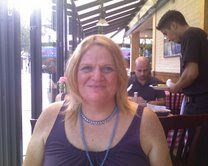
While riding to work, I saw two women who, from all appearances, were in the later stages of middle age. (No, they're not the ones in the photo!) One rode a Cannondale road bike with dropped bars; the other pushed pedals on a Specialized hybrid or flat-bar road bike.  Both looked as if they were dressed from the Terry catalogue.  Then, during my bike ride home, I saw a woman who seemed a few years older than the two women I encountered earlier. 


She could have been a poster child for the AARP.  Her scarf very stylishly swirled a pastel paisley between her neck and breasts; her pants and blouse were tailored but un-self-conscious.  She was navigating the streets on what looked like a French mixte of some sort:  I couldn’t see the brand, but I knew it wasn’t Peugeot, Motobecane, Gitane, Ficelle or any of the other Gallic marques I know.


Then, as I dismounted my bike in front of my place, I saw a woman riding an English three-speed down my street.  That itself was not as remarkable as that she was, apparently, older than the other women I saw by at least a decade.  What’s more, she looked as if she’d been living in the neighborhood all of her life.  If that is part of her story, she is probably Greek or Italian (She looked the part) and, most likely, the wife of a blue-collar or middle-class worker.


Time was (There’s that phrase again!), not so long ago, when a woman like her would not be on a bicycle.  Nor would her husband or any other member of her family old enough to drive.  For that matter, I would not have seen women like the others I mentioned.  


As I’ve mentioned in other posts, when I was in my late twenties and thirties, I could ride the whole length of Vernon Boulevard, near where I live now, cross the Pulaski Bridge and ride down Kent Avenue and further along the Brooklyn side of the East River and New York Bay without seeing another cyclist.  Back then, most of the neighborhoods were blue-collar or lower middle-class, except for some then-low-income areas of Williamsburg and Sunset Park.  The culture of those places was much like that of the neighborhoods in which I grew up:  You simply didn’t ride a bicycle if you were old enough to drive a car, whether or not you actually drove one.
 

Furthermore, those rare adult cyclists I encountered were all male.  Most were close to my age; occasionally, I’d pass one who were older than my parents.  Usually, such an older male cyclist was an immigrant who never gave up the habit, so to speak, after settling in the New World.  But I never saw a female cyclist unless I rode into a neighborhood like Brooklyn Heights or the Upper East Side or out of the city into a suburban enclave.  The few I saw weren’t commuting or running errands; perhaps they were riding for fitness, but most likely, just to decompress.  


It was rarer yet to see “older” women ride.  Of course, at that time, my elders were in their late thirties or older.  I recall two simply because they were so unusual:  One, who was probably in her forties and looked wore a Chanel suit and slingbacks while riding a women’s Colnago--to this day, the only one of those bikes I've ever seen.  The other rode with my bike club; she was about the same age I am now.  Even more interestingly, her husband didn’t ride.


I’m her now, minus the husband.  That is to say, I’m an “older” woman, at least in the way I used to define it.  Although I like it, I often wish I could have begun my gender transition at an earlier age so I could have lived more of my life as a woman.  Then again, given the conditions of the time, would I have grown up to be that woman I so admired on our club rides?  Or the one I saw on the Colnago?  Or one of those women “of a certain age” I used to see riding to marketplaces, to parks, to stores and offices—sometimes to their jobs—when I was living in Europe?

16 October 2010

Growing Old As We're Starting To Live


I've been asked to co-facilitate a transgender forum on aging at a conference for LGBT older adults next month.  I've agreed to do it, knowing that my qualifications to do it consist of the following:
  • I am trangendered
  • I am aging.  (Then again, I guess we all are.)
The invitation got me to thinking, though, about what aging means for us in the LGBT community, and for transgenders in particular.

So far, the most trenchant thought that has emenated from my pretty little head (ha!) is this:  Aging in the LGBT community has everything to do with its youth-centeredness.  In fact, the way we age is the very reason why the LGBT world is as youth-centered as it is.  It's not so much that we're trying to avoid or fight back our aging; it's the fact that we--most of us, anyway--only get to live as who and what we are at a realtively late age that causes us to live in such a youth-centered milieu.

Even with the increased acceptance of LGBT people (the recent hate crimes notwithstanding), very few bisexuals, fewer gays and lesbians , and even fewer transgenders, have the opportunity to spend our adolescence and early adulthood as the people we actually are.   Most gays and lesbians live closeted lives until they are old enough to move out of their families' homes, and some continue to deny their need to love and be loved in their own ways long after they have become independent of the families, communities  and schools that gave birth to and reared them and inculcated them with their communities' and cultures' values about families and other sorts of relationships--including the kinds of relationships people should have with themselves.  

Even gays and lesbians raised in the most loving of families and in the most accepting communities face hostility somewhere, some time. The result is something I've seen in those students of mine who grew up with violence, whether it was physical, verbal, mental, emotional or spiritual, and whether it came from their peers, members of their families or communities, or their governments and their agencies of enforcement.  Some people come out of those experiences shell-shocked; others are very canny or what people would call "street-smart", and still others are formed or deformed by their anger and resentments.  But nearly all of them do not have the opportunity to learn how to develop or maintain relationships in ways that their peers from more secure and stable environments learn.  And, because so many of them also come from homes that are dysfunctional in one way or another, they may know that they want something different but have not had any models from whom they can learn how to build it in their own lives.

Most gays and lesbians don't grow up with any models of how they can build their relationships and their lives.  All most of them see when they're growing up are heterosexual relationships, and some of those aren't very nurturing of the spirits of the people in them.  And, of course, nearly all of the love and familial relationships depicted in popular, and even higher, culture, are of that variety.

What happens, then, is that gays and lesbians start to learn how to express love and build relationships that suit them later--sometimes much later--than heterosexuals do those things.  Most teenagers have some experience of dating members of the other gender; many (I won't venture a guess as to how many) have sex and some actually learn what it means to love, and be loved, in an intimate way by a member of the "opposite" gender.  Most gay teens and adolescents don't have those experiences; those who do almost never have the opportunity to have those experiences publicly.  If you are a boy dating a girl or vice-versa, even if your family, friends and others in your community don't like whomever you're dating, they still support your urge to date members of the "opposite" gender, mainly because they're seen as stepping stones to marriage and family.

So, what a straight sixteen-year-old experiences is not a part of a gay person's life until he or she is in her twenties, thirties or even later.  And for transgenders--and, interestingly enough, bisexuals--that sort of experience may come later still.  I began to live as the woman I am in middle age, and I have been living my life only for seven years now.  That means I am just beginning to learn how to relate to people, and express love (which includes, but is not limited to, sexuality) as a woman, rather than as a female who had to channel herself through a filter of maleness.  

That, by the way, is the reason--I think--why one can't predict the sexuality of a person who transitions.  One of the reasons, along with finances, why I didn't start my transition earlier in my life was that I thought, as most people thought, that a true male-to-female transsexual was attracted to men.  It happened that the first male-to-females who had sexual reassignment surgery did indeed date, and in some cases married, men.  Christine Jorgensen comes immediately to mind, and it's hard to imagine how she, not to mention society, might have been different if she didn't fit into the roles that were considered acceptable for women in the 1950's, when she made her transition.

So I had to spend  a lot of years, not only alienated from my own sense of who I am, but also of how to relate to anyone else, whether in a sexual or more platonic way.  The sense of myself I could and would have formed in my teen years, and the kinds of relationships I might have developed as a result, are parts of my life I'm only beginning to discover--at an age when my parents were already grandparents.  

Of course, there are many other issues involved in aging for LGBT people, and transgenders in particular.  But I never realized until now that the youth-orientedness of our community was really a manifestation of the fact that we, in essence, start our lives later than straight people and cisgenders.

14 December 2009

Wrinkles and Folds


Today I noticed every line in my face, and every ounce of flab on my body. Maybe it's because I'm tired. Or maybe I am old and fat. It seemed that everyone--even the old profs at the department meeting--had smooth faces and lean bodies. What's happening to me?

Am I buying into society's expectations about women? If I'm wrinkly and flabby, I won't get a date, much less my book published, even if I have the mind of Virginia Woolf or Marie Curie, or the soul of Gloria Steinem or Dorothy Day. At least, that's how things seem.


Yes, every one of those lines around the corners of my lips looks like a crack in a weathered tenement building. And the swelling around my left side has subsided, but is still there--what, almost three weeks after my mishap. The doctor said that all I can give it is time, and that the baths I've been taking for other reasons are the best thing I can do for it.

But when a prof who's been at the college since the day it opened and another who's my mother's age and survived a stroke three years ago look younger than I do--or seem to--what does that say about me?

Someone once told someone--I forget who--that she "earned" every one of her wrinkles. Nice thought, but I wish I hadn't done so much to merit them. It's like when you go through a difficult experience--like, say, not knowing where your next meal is coming from-- and someone tells you it's building your character. Yeah, OK, I always want to tell such a person. But I'm not ready to have such depth yet. It would be nice to have what other people have, just for once.

Like being, if not young, at least youthful. Or looking it. I mean, some of my best friends are old (or at least older) women. But I don't want all of my friends to be just like me! Well, maybe that isn't so bad, now that I've accepted that I'm turning into my mother--or that I already am like her, and have been like her for as long as I can remember, at least in some ways. That's not such a bad thing, really, when I consider who my mother is!

Then again...part of my healing is developing wrinkes...at least in that part of my body. It's funny, isn't it, that part of being a healthy woman means having wrinkles--or folds, anyway--in that at least that part of your body? Now there's something no man will ever understand!


23 November 2009

What Age Do You Want to Be?


This cold is slowing me down, the grayness and the shortness of the days are getting me down and it seems that just about everything else is spending me down.

And the next few days, save for Thanksgiving Day itself, will be non-stop work, as I am moving.

It's not the first time I've moved. In fact, I've probably moved more than anyone should. I recall the time Janine came to visit after one of my moves and remarked that I have had more addresses than anyone else she knows. It's an American thing, I guess.

You know what they say about being careful of what you wish for. Even though I like my current landlady and the place isn't bad, I felt that I might want to move as soon as I was well enough. I had been debating, to myself, a move to Colorado or Seattle or Europe. One problem is the same for all of those locales: finding work. And as much beauty as there is in Colorado, it's a bit far from an ocean for my tastes.

So now I'm moving to a place that's a few blocks from where I now live. The place is a good bit bigger, and the fixtures are in better condition. But now I'm feeling anxious about it. After all, the place in which I'm living now is the first to which I moved as Justine. And, of course, I've had my operation while living here.

At least, the apartment to which I'm moving is close enough so that I'll see Millie and Tami, the best friends I made on this block and the best friends I made in a very long time. And it's closer to transportation and shopping than the place where I'm living now.

Part of me tells me to look forward to the move. After all, the last two moves were good for me. I want to think this one will be, too. Other changes may result from it: good ones, I hope.

Then again, so much of what I've been experiencing during these past few months simply can't be compared to anything I experienced earlier. It's an odd feeling, in a way: Sometimes I wonder whether I'm losing my ability to miss my past.

Next semester, one prof is offering a Special Topics course he's called The Literature of Aging. He's made flyers and brochures that begin with this question: If you could be any age again, what would it be? 20? 30? 40? 50? 60? My answer would be "none of the above." Actually, I haven't been sixty, so I couldn't repeat that age yet. Fifty was just a year ago: It wasn't bad, considering that I was waiting for my surgery. But it's hard for me to imagine repeating any of those other ages. At forty, I was in the best physical shape of my life, but I was grasping at straws: I'd started to date Tammy in the hope that her love would make me into a man, or would at least make me want to be one. Thirty and twenty were both miserable times in my life; I would not want either.

Now, if I could have lived at any of those ages as a woman, I might feel differently about repeating them. But then, I wouldn't be repeating them, would I?